
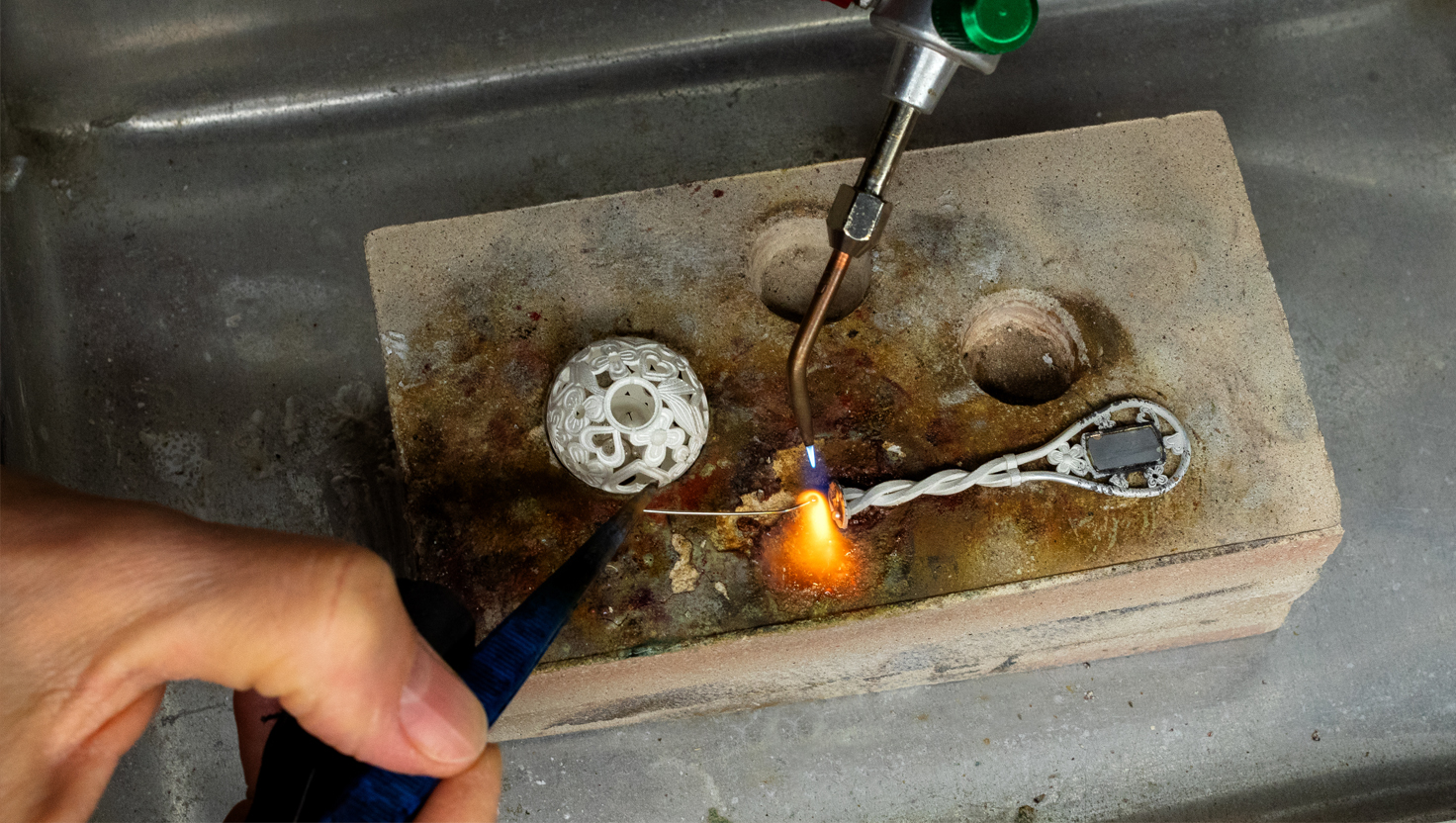
LESSON 5: SOLDERING SILVER AND GOLD – HOW TO PROPERLY JOIN METAL TO METAL IN JEWELLERY MAKING.
INTRODUCTION TO THE COURSE
Contents
- 1. INTRODUCTION TO THE COURSE
- 2. MODULE 1: INTRODUCTION TO SOLDERING AND KEY CONCEPTS
- 3. MODULE 2: SOLDERING SILVER – KEY TECHNIQUES AND CHALLENGES
- 4. MODULE 3: GOLD SOLDERING – DIFFERENT KARATS, COLORS AND RULES
- 5. MODULE 4: PRACTICAL TIPS & COMMON SOLDERING MISTAKES
- 6. SUMMARY
- 7. Want to know more?
- 8. Stay up to date
Soldering is the heart of a jewellery business—the moment when separate small pieces become a single, durable and beautiful piece of jewellery. Whether you’re connecting delicate sterling silver chains or building a ring from multicolored gold, the quality of the solder joint determines durability, aesthetics and long-term wearability.
Mastering jewelry soldering means understanding three essential factors:
Temperature control
Surface cleanliness
Choosing the right solder alloy
This tutorial for beginners takes you step by step through the entire process: from understanding what soldering is and why hard soldering is preferred in jewellery making, through the specifics of working with silver and various gold karats, to practical techniques that help you avoid overheating, discoloration, porosity or weak joints.
Training goals:
How to choose the right type of solder (hard, medium, easy) and the right flux for each metal.
How to distribute heat evenly so solder flows cleanly without deforming your workpiece.
How to plan a correct soldering sequence to prevent earlier joints from re-melting.
How to avoid common soldering mistakes such as dirty surfaces, wrong flame control or choosing an incompatible solder color.
This training consists of 4 modules. Combined with practice, these techniques will give you confidence that every element you solder—whether simple pendants or more complex soldering projects—will be strong, clean and ready to withstand everyday use.
MODULE 1: INTRODUCTION TO SOLDERING AND KEY CONCEPTS
What is soldering and why is it essential in jewellery making skills?
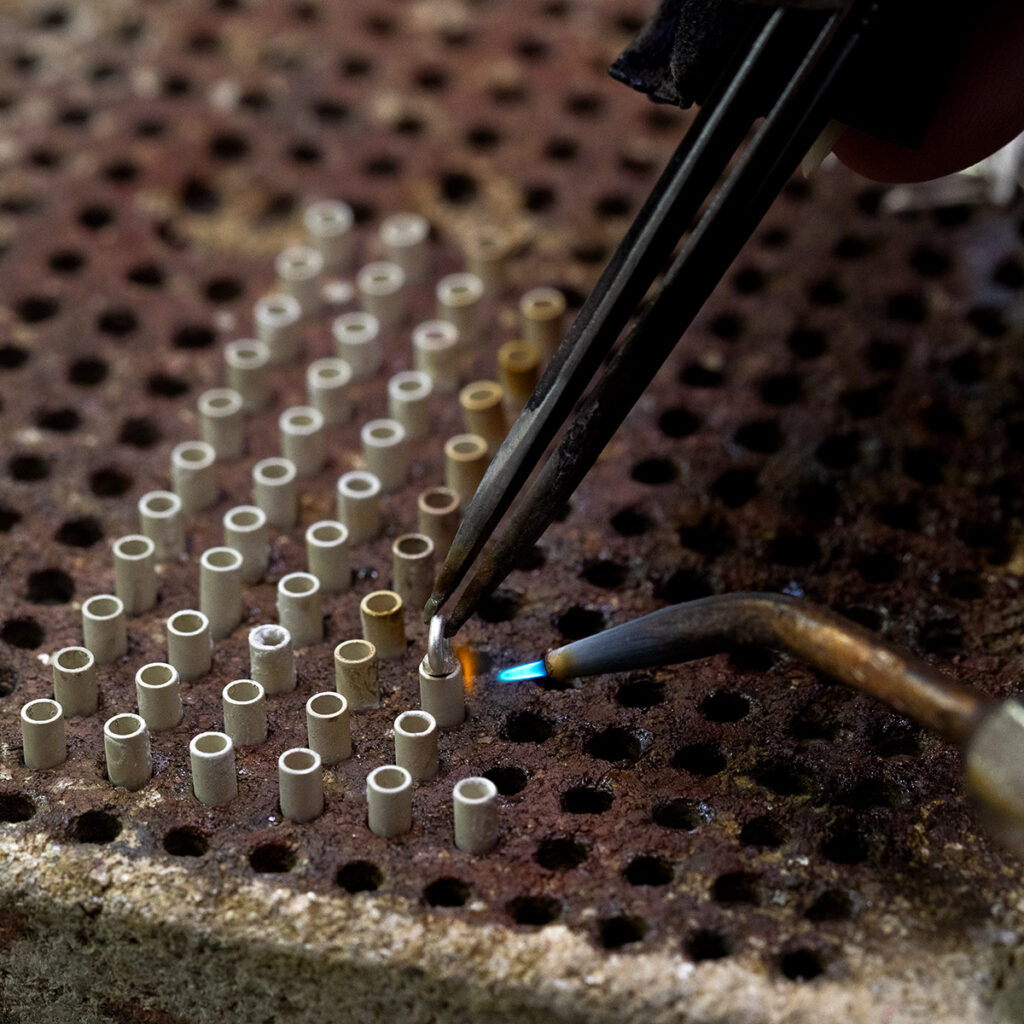
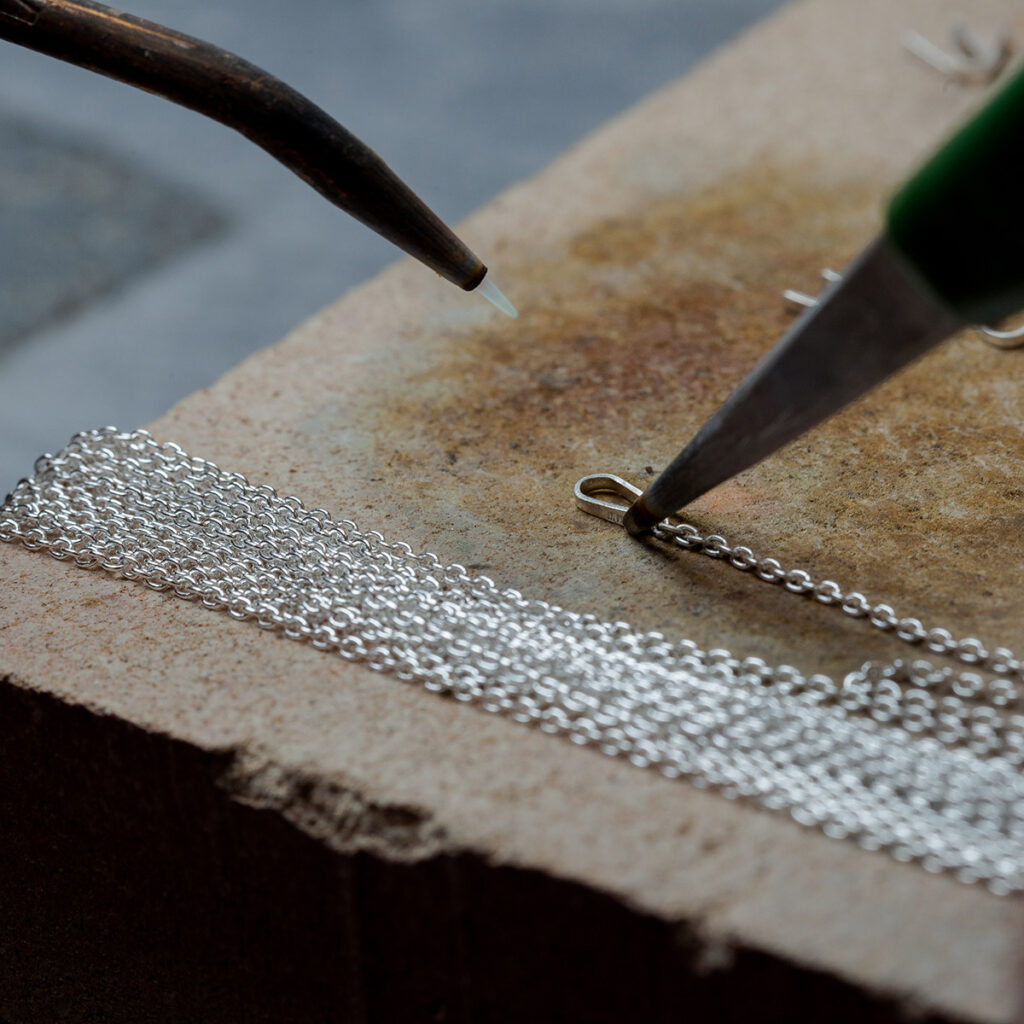
Soldering is the process of joining metal jewelry making supplies using a filler metal (solder) that melts at a lower temperature than the base metal. When heated to the correct temperature, solder flows into the joint by capillary action, creating a strong, seamless connection. In jewellery making, soldering provides both structural strength and aesthetic precision, which is why it is used in nearly every project: from rings and bezels to earrings, chains and intricate jewellery designs.
Types of soldering
How to make metal jewelry with soldering technique:
Soft soldering – lower temperature, weaker joints, not recommended for precious metals such as soldering silver and soldering gold.
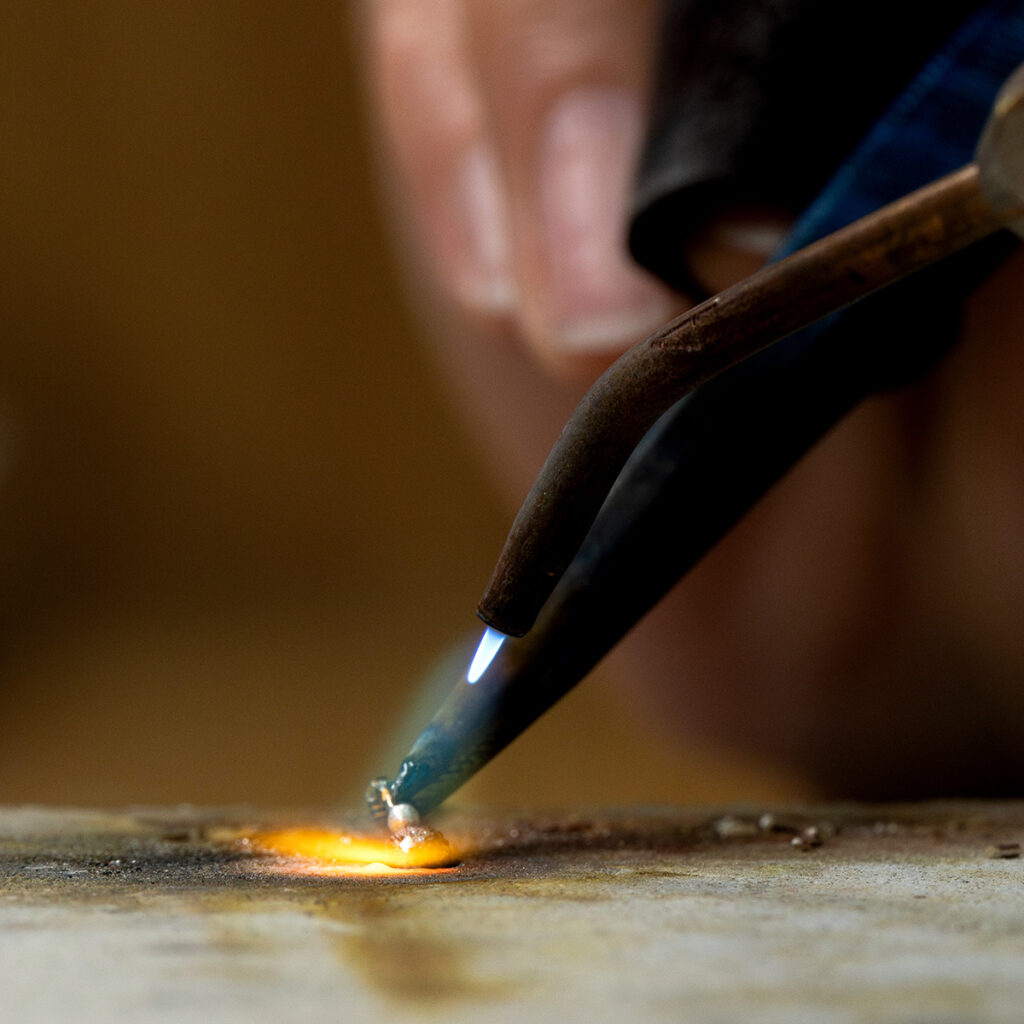
Hard soldering (brazing) – higher temperatures (usually above 600–700°C), creating strong, long-lasting joints.
Hard soldering is the standard in professional jewellery making because it provides durable, clean and precise connections required for gold and silver.
What determines soldering success
A perfect solder joint depends on:
Even heating
Correct flux application
Proper solder selection (melting point & color match)
Clean metal surfaces
Steady flame control
Different solders vary in composition and color—especially important for white, yellow or rose gold projects.
MODULE 2: SOLDERING SILVER – KEY TECHNIQUES AND CHALLENGES
Why soldering silver requires precision
Silver is an excellent conductor of heat. This means:
Heat spreads rapidly through the entire piece
You must warm the whole component evenly
Overheating one spot can cause melting or firestain
Underheating prevents solder flow
Because of this, proper torch control and heat distribution are essential.
How to solder sterling silver
To solder silver successfully, you should have three types of silver solder:
Hard solder
Medium solder
Easy solder
This allows you to solder multi-step projects without re-melting earlier joints (begin with hard, then medium, finish with easy).
Steps for soldering silver:
Clean both surfaces thoroughly (no oil or oxide).
Apply an appropriate jewelry flux.
Heat the entire workpiece evenly.
Bring the joint to solder-flow temperature.
Allow solder to flow naturally into the seam.
Cool, pickle, rinse and inspect jewellery design.
Cold soldering in theory vs reality
“Cold soldering” is sometimes mentioned in other fields, but it does not apply to professional jewellery making. Even soft soldering exceeds 300–400°C. For gold and silver, only hard soldering delivers reliable, long-lasting results.
MODULE 3: GOLD SOLDERING – DIFFERENT KARATS, COLORS AND RULES
Why soldering gold can be challenging
Gold comes in multiple purities—9K, 14K, 18K—and many colors, including:
Yellow gold
White gold
Rose gold
Each alloy has a different melting point. Jewelry solders for gold must match both melting temperature and color tone.
Examples:
White gold often requires palladium-containing solder
Rose gold solder includes more copper to match the color
Yellow gold solder varies depending on karat purity
How to solder gold with a torch
Gold soldering follows the same principles as silver, but with stricter color matching:
Clean the metal thoroughly
Apply the right flux (borax or professional jewelry flux)
Heat evenly—avoid local overheating
Use the correct solder order (hard → medium → easy)
Allow solder to flow smoothly without distortion
Hard soldering in practice
Hard soldering provides the strongest, most durable joints for gold jewelry.
Solders melt at higher temperatures, but once cooled they create clean, professional bonds suitable for:
Engagement rings
Wedding bands
Fine gold chains
High-end, multi-part constructions
MODULE 4: PRACTICAL TIPS & COMMON SOLDERING MISTAKES
Planning soldering sequences
For multi-step projects:
Always begin with hard solder
Move to medium solder
Finish with easy solder
This prevents earlier joints from opening while working on new connections.
Clean surfaces and proper flux use
Dirty metal surfaces or oxide layers prevent solder flow.
Thorough cleaning + appropriate flux = strong, clean solder joints.
Temperature control
Too low → solder won’t flow
Too high → base metal may melt or discolor
Skilled soldering is about gradually and evenly raising the temperature of the entire piece.
Common soldering mistakes:
Overheating the metal
Using wrong solder color (pink hue in white gold, etc.)
Incorrect flame size or direction
Poor heat distribution
Reheating earlier joints
Working with unclean surfaces
All of these can be avoided with proper technique and consistent practice.


SUMMARY
Soldering silver and gold is not just a technical procedure—it is a creative and essential part of professional learning how to make jewelry. Understanding solder types, melting temperatures, alloy colors and heat distribution unlocks new possibilities and ensures that every connection in your jewellery is:
strong
clean
aesthetically seamless
durable in long-term wear
The more you practice, the more predictable and refined your results will become. Mastering soldering allows you to create jewelry range that meets the highest standards of craftsmanship. Explore our jewelry findings such as jump rings, wires, blanks for rings, earrings, necklaces, bracelets, pendats and cuffflinks, to make your jewellery easier and faster.
Want to know more?
- Find out: Sterling silver jump rings in jewellery making projects
- Read the article: Ring blanks – design stylish jewellery for hands – part 2
- Get inspired: The most fashionable chain types – part 2
- Check also: Jewelry trends for Fall 2024
- Discover: Infinity bracelets and clover bracelets – how to make bracelets with symbols