

TRAINING 30: HOW TO MIX SILVER AND GOLD IN ONE PIECE OF JEWELLERY
INTRODUCTION
Contents
- 1. INTRODUCTION
- 2. MODULE 1: SILVER–GOLD BIMETAL SHEET – BEGINNER-FRIENDLY TIPS
- 3. MODULE 2: KEUM-BOO – FUSING GOLD FOIL ONTO SILVER
- 4. MODULE 3: MOKUME GANE – MULTI-LAYER LAMINATION
- 5. MODULE 4: SOLDERING AND GOLD INLAYS IN SILVER
- 6. MODULE 5: ELECTROPLATED GOLD AND VERMEIL – A SURFACE GOLD LAYER
- 7. SUMMARY
- 8. Want to know more?
- 9. Stay up to date
Mixing metals: the cool shine of silver with the warmth of gold opens up powerful accessories design possibilities – from subtle accents to bold contrasting tones. In this online jewelry training you’ll learn popular methods for joining precious metals such as silver and gold, including bimetal sheet, electroplated gold (vermeil), gold inlays, keum-boo, and mokume gane.
Jewellery Training Goals
Understand the properties of silver–gold bimetals and how to work with them.
Master inlay, soldering, and diffusion bonding techniques for silver–gold jewelry.
Understand surface processes such as keum-boo and yellow gold plating on silver 925.
Learn how to choose the best method based on style, budget, and workshop capabilities.
This jewellery making training consists of 5 modules.
MODULE 1: SILVER–GOLD BIMETAL SHEET – BEGINNER-FRIENDLY TIPS
Structure: a layer of 14K or 18K gold roll-bonded onto silver 925.
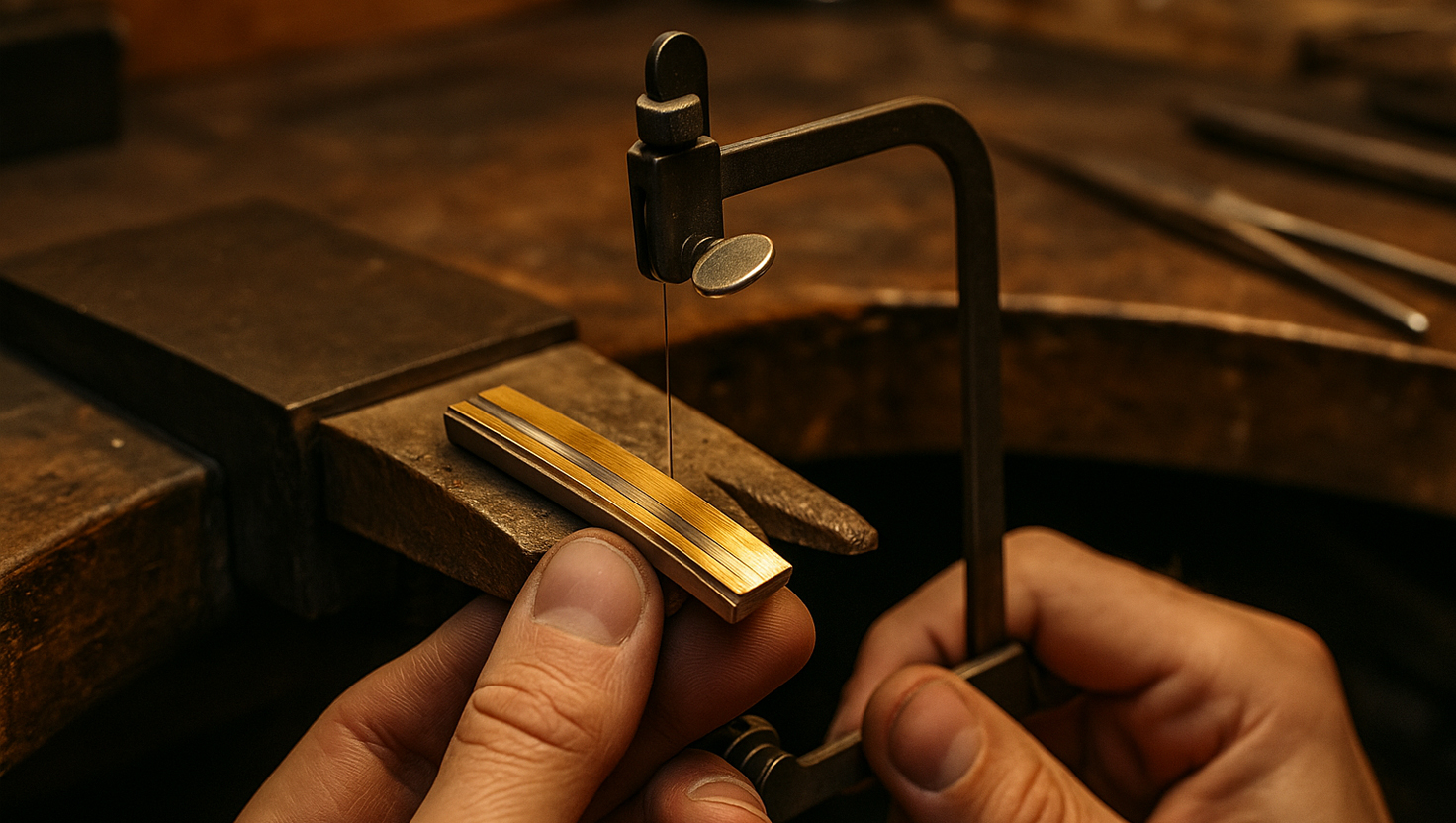
Cutting, bending, and soldering edges without overheating the bond zone.
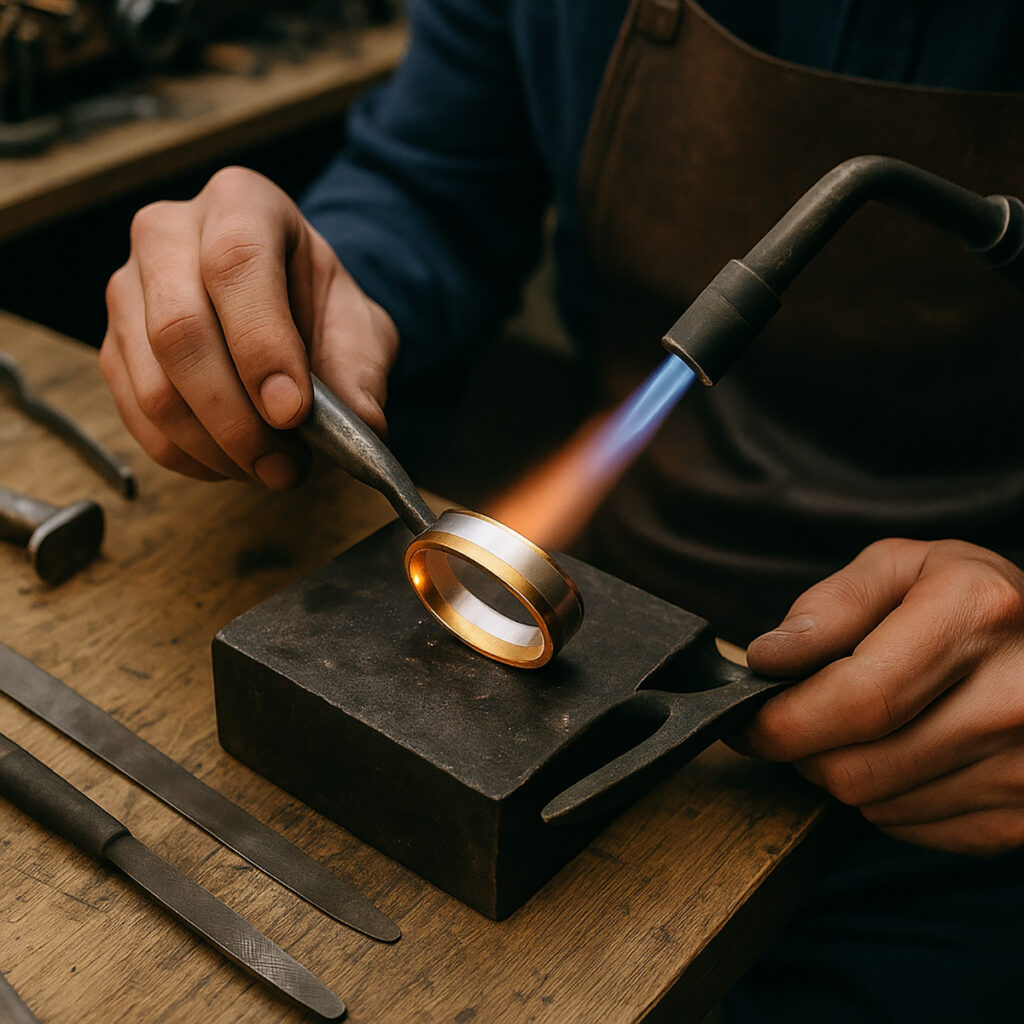
Best use cases: two-tone wedding bands, bright overlays on hoop silver earrings and textured geometric pieces.
Key takeaway:
Bimetal sheet lets you create two tone jewelry quickly – without complex high-temperature bonding processes.
MODULE 2: KEUM-BOO – FUSING GOLD FOIL ONTO SILVER
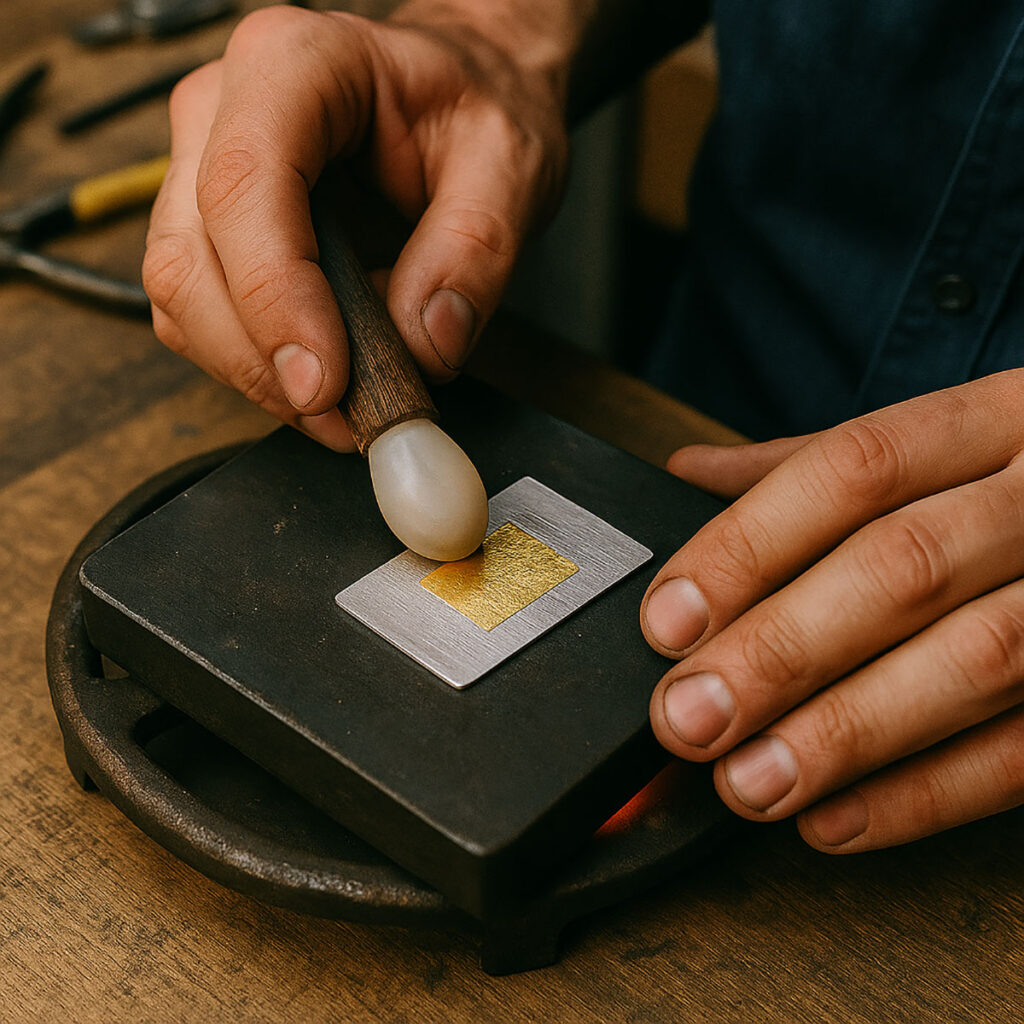
A Korean technique: 24K gold foil fused onto annealed, de-oxidized fine silver 999.
Around 350°C, pressure with an agate burnisher creates a durable Au–Ag diffusion bond.
Ideal for botanical motifs, geometric accents, and high-contrast designs on matte silver.
Key takeaway:
Keum-boo creates long-lasting yellow gold patterns on silver using simple tools and relatively low heat.
MODULE 3: MOKUME GANE – MULTI-LAYER LAMINATION
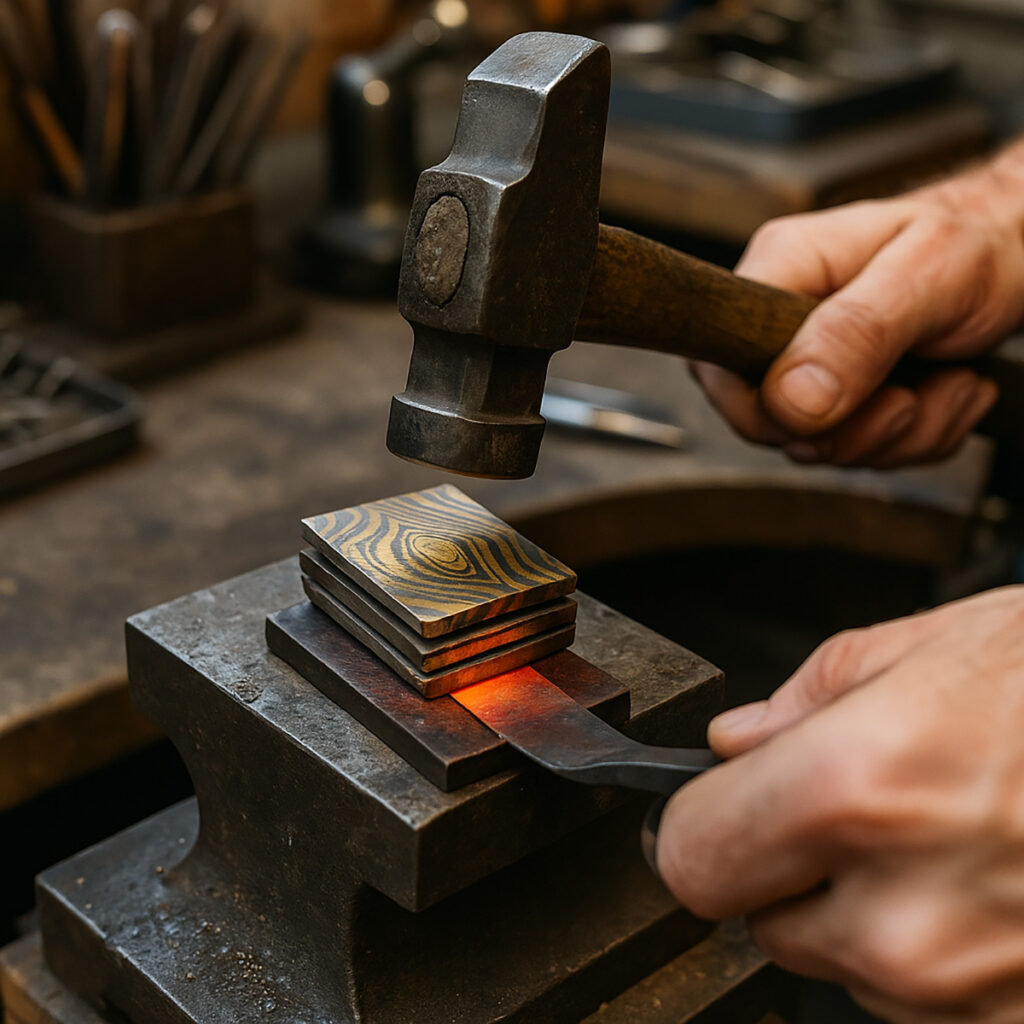
Stacks of alternating layers of silver and yellow gold (sometimes copper) bonded under heat and pressure (often in a controlled atmosphere/vacuum).
Twisting, rolling, and etching reveals wood-grain-like “mokume” patterns.
Requires advanced equipment, strict surface preparation, and patience – often reaching high process temperatures (around 950°C depending on the stack and method).
Key takeaway:
Mokume gane produces unique, creative, organic patterns – but it demands advanced setup and careful processing.
MODULE 4: SOLDERING AND GOLD INLAYS IN SILVER
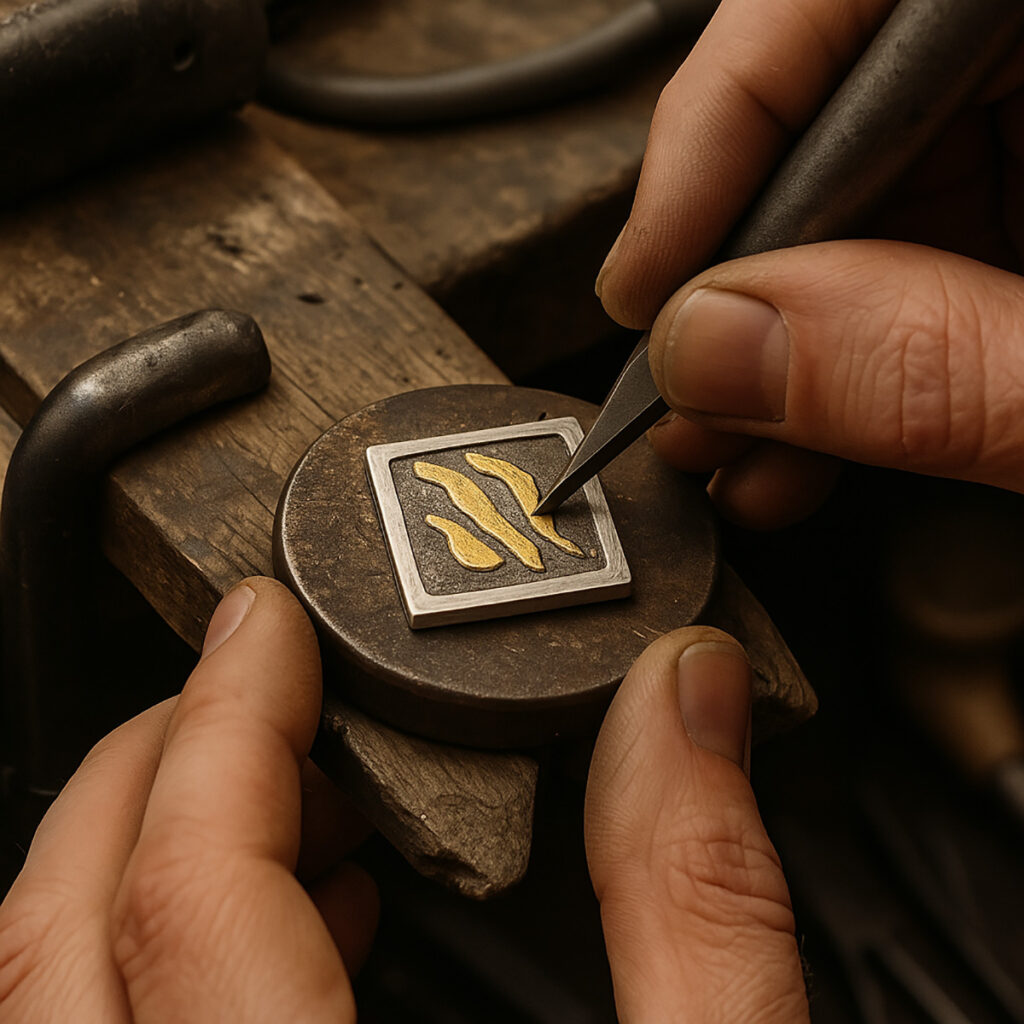
Use high-temperature Au–Ag solders and extremely precise joints (tight gaps, e.g., ~0.05 mm).
Mill seats/recesses in silver, then set gold wire or sheet and solder or mechanically lock it in place.
After finishing and selective etching, yellow gold can stand proud against silver – perfect for signet-style pieces.
Key takeaway:
Soldered gold inlays in silver deliver a strong visual contrast and a durable mechanical connection.
MODULE 5: ELECTROPLATED GOLD AND VERMEIL – A SURFACE GOLD LAYER
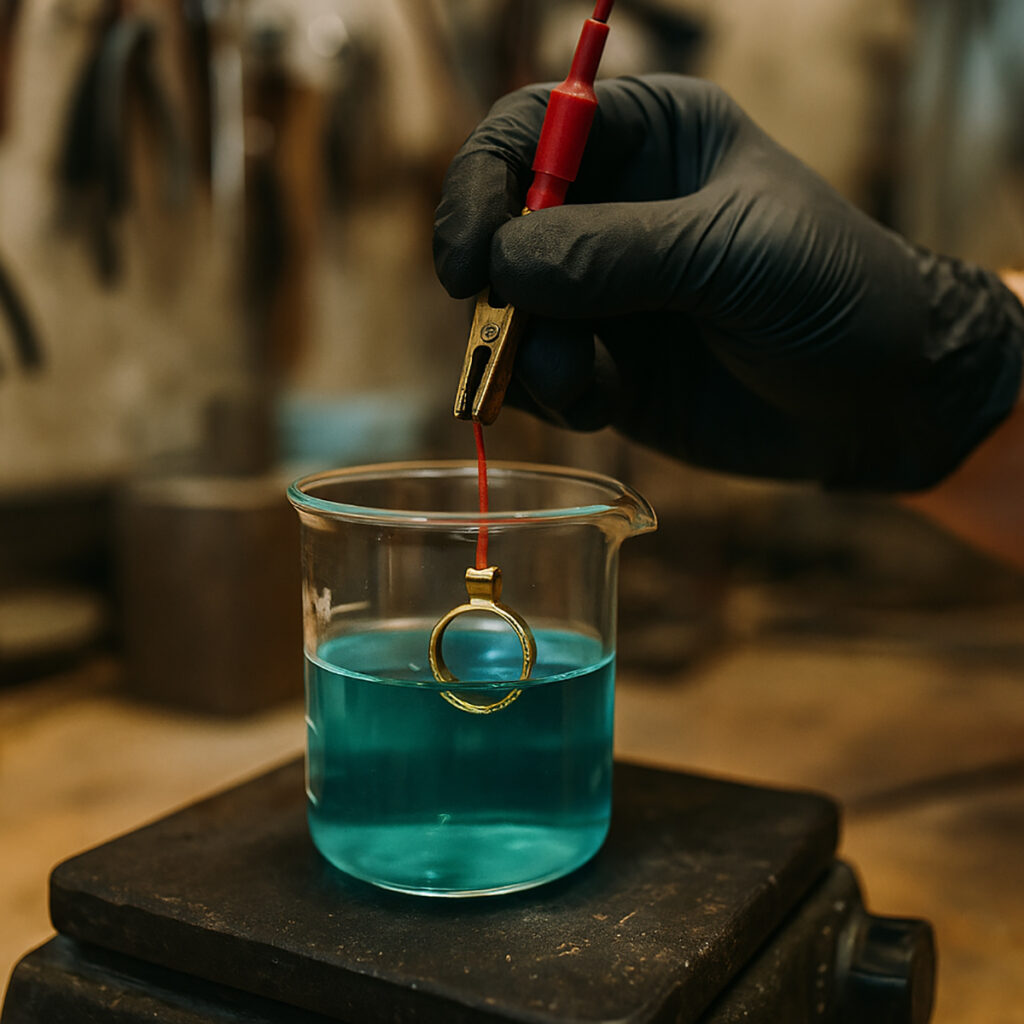
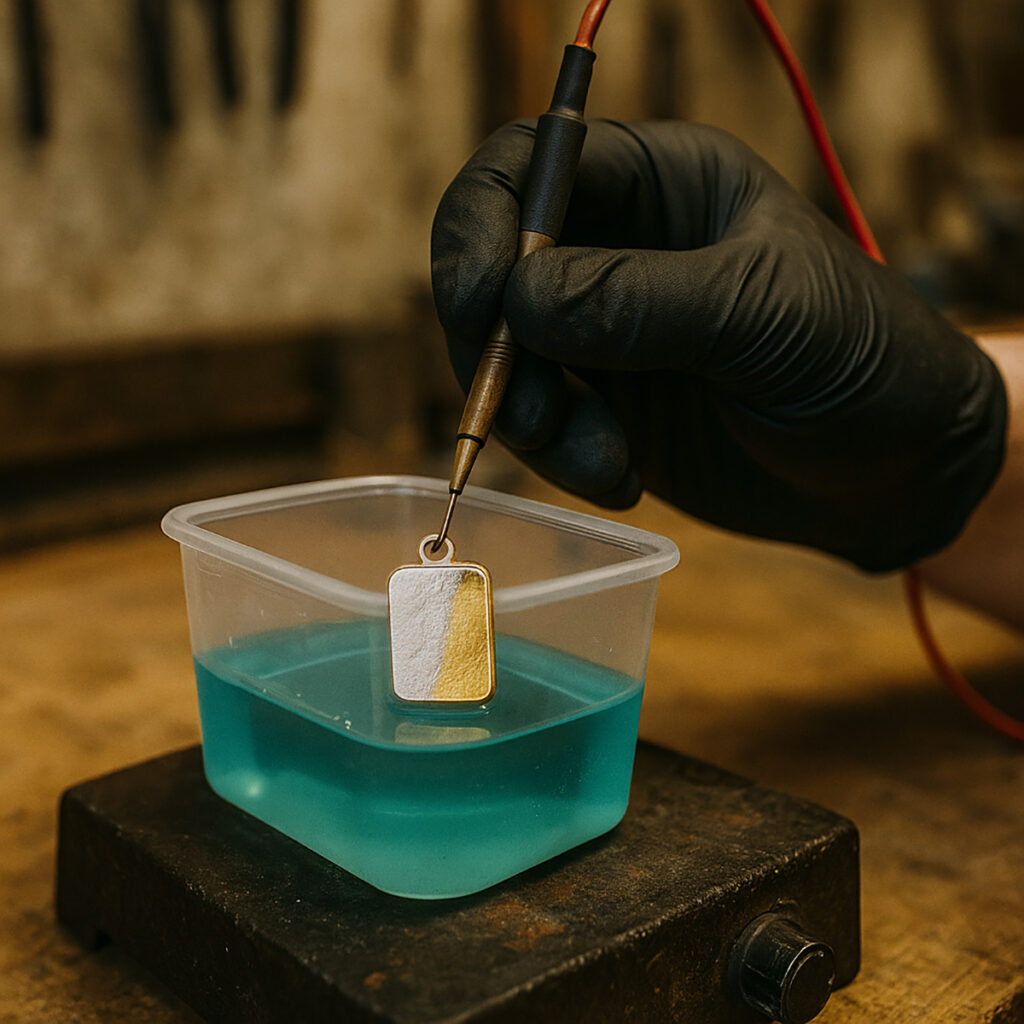
24K gold plated onto sterling silver; typical thickness ranges 0.5–3 μm (vermeil is commonly ≥ 2.5 μm, depending on the standard used).
Surface prep is everything: polish-clean, acid activation, then gold plating bath (cyanide or non-cyanide systems).
Pros: even color, lower cost. Cons: plating can wear over time and needs protection and proper care.
Key takeaway:
Gold plating is an economical way to achieve a gold surface on silver – but the layer can wear, so finishing and care instructions matter.
SUMMARY
Once you know these five key ways to mix metals such as silver and gold – bimetal sheet, keum-boo, mokume gane, soldered inlays, and electroplated gold/vermeil – you can choose the method that fits your style, budget, and workshop tools. The result: professional, durable two-tone jewelry collection that most customers immediately perceive as more premium and distinctive.
And remember: in the 925CRAFT offer you’ll find a wide range of silver and gold jewellery making supplies such as earring, bracelet, necklace, ring and cufflink bases – plus charms, jump rings, bails, headpins, pearls, natural gemstones, diamonds, crystals and other jewellery making supplies that make creating matched silver-and-gold jewelry faster and easier.
Want to know more?
- Find out: How to tell if pearls are real?
- Read the article: How to use silver hoop earring findings – part 1
- Get inspired: Swarovski. The history
- Check also: How to Make Charm Bracelets and Bead Bracelets
- Discover: Infinity Pendant in Sterling Silver 925 & 14K Gold 585 – Necklace, Charm & More by 925CRAFT