

TRAINING 29: LOST WAX CASTING PROCESS – HOW IT WORKS AND HOW TO GET STARTED
JEWELRY TRAINING INTRODUCTION
Contents
- 1 JEWELRY TRAINING INTRODUCTION
- 2 MODULE 1: THE BASICS – WHAT IS LOST WAX CASTING?
- 3 MODULE 2: DESIGNING AND MAKING A WAX MODEL
- 4 MODULE 3: BUILDING THE WAX TREE AND INVESTING (PLASTER MOLD)
- 5 MODULE 4: BURNOUT AND VACUUM CASTING
- 6 MODULE 5: CUTTING, FINISHING AND POLISHING THE CASTING
- 7 JEWELLERY MAKING COURSE SUMMARY
- 8 Want to know more?
- 9 Stay up to date
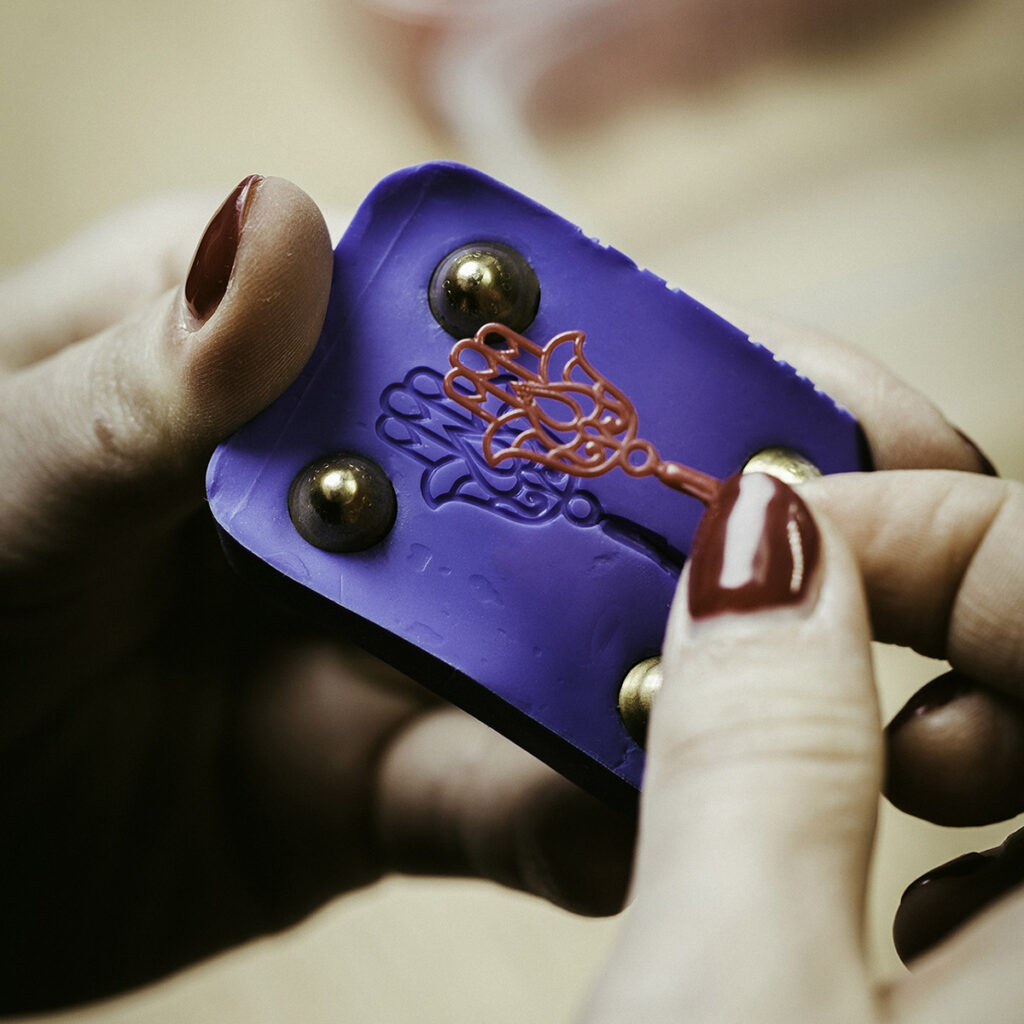
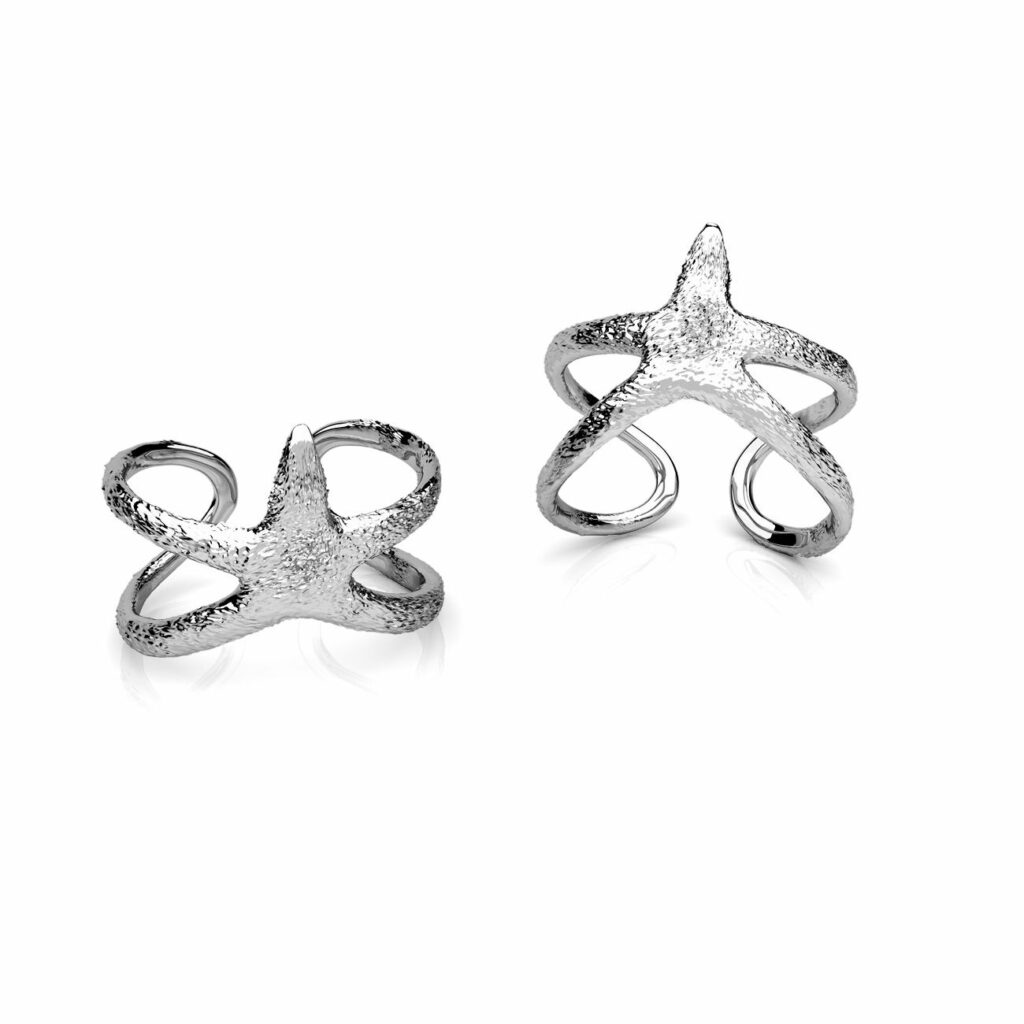
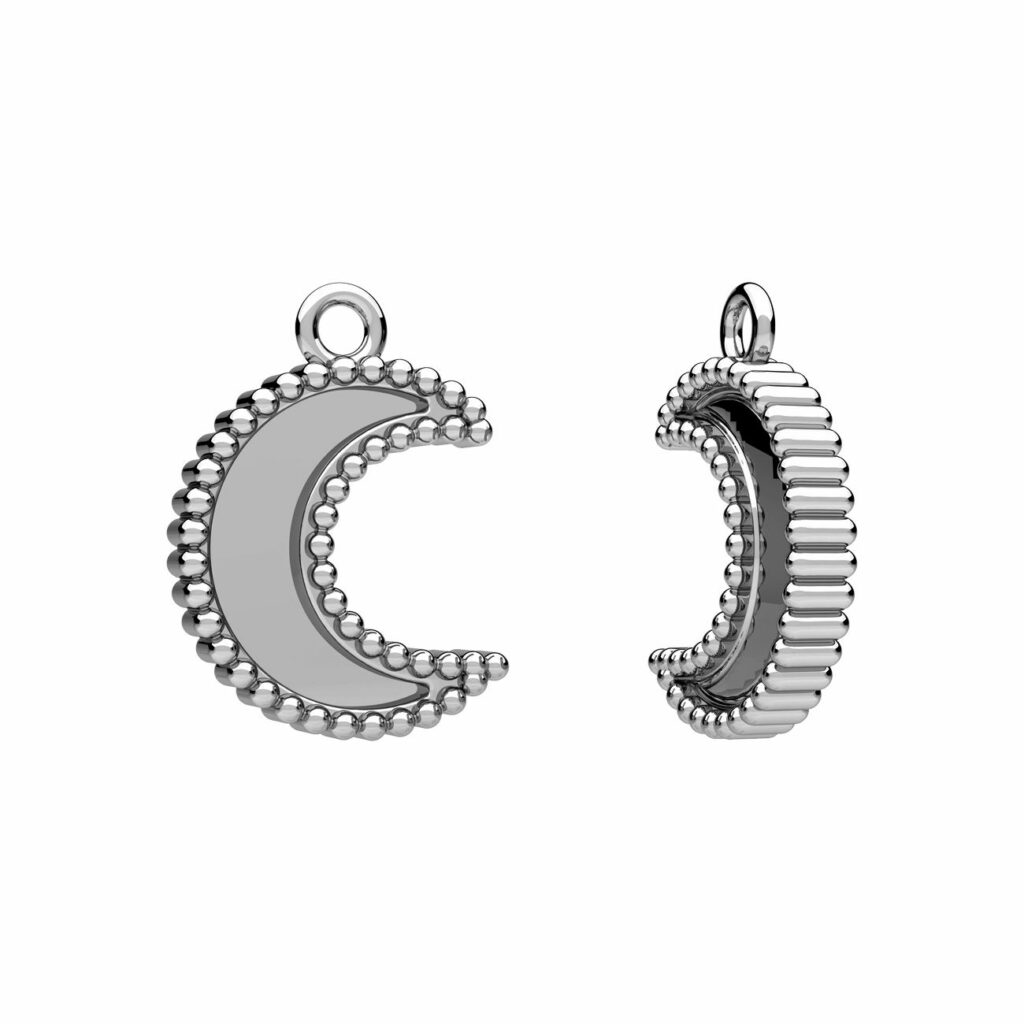
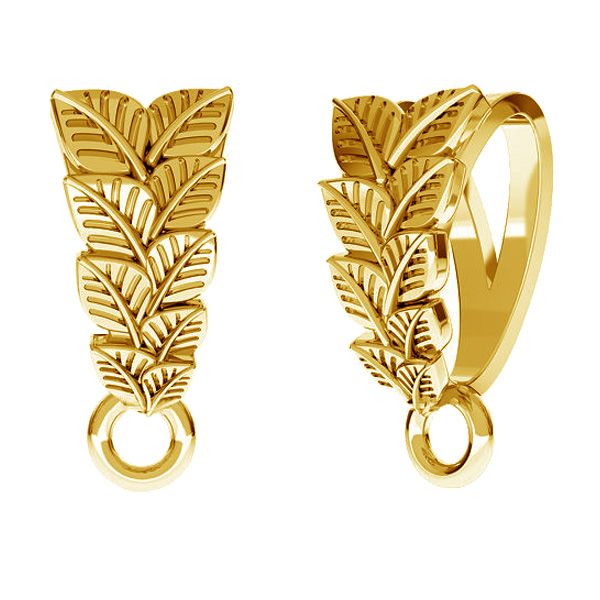
Lost wax casting technique (also called investment casting process) is a versatile process that allows you to cast even highly complex shapes in silver or gold. It lets you turn a original wax model into a precise jewellery component without time-consuming hand-forming of metal alloys – while preserving fine detail and undercuts.
Training for Jewellers Goals
Understand the lost wax method – from wax pattern to finished metal casting.
Learn the essential tools, materials, and kiln/furnace parameters needed to start lost wax casting process in a workshop.
Learn how to choose investment casting plaster, set burnout times (wax elimination), and use vacuum casting techniques.
Get practical finishing tips: cutting sprues, pickling, and polishing cast objects.
This jewellery making training consists of 5 modules.
MODULE 1: THE BASICS – WHAT IS LOST WAX CASTING?
A short history: from ancient bronze work to modern jewellery casting.
The core workflow: wax pattern → investment mold → burnout → metal casting.
Key advantages: exceptional detail reproduction, easy duplication of designs, and freedom for undercuts and complex geometry.
Key takeaway:
Lost wax casting process transfers any wax pieces into metal while preserving even the smallest details.
MODULE 2: DESIGNING AND MAKING A WAX MODEL
Wax types: hard (blue), soft (pink), and 3D-printable casting wax/resin.
Wax carving tools: knives, wax pen, burs.
How to start: simple rings from flat wax sheet; a test pendant logo.
SEO tip: use keywords like lost wax model, wax carving jewelry, and lost wax casting jewellery in your online materials.
Key takeaway:
A clean, well-built wax pattern is the foundation of a perfect investment casting process – focus on sharp edges and proper wall thickness.
MODULE 3: BUILDING THE WAX TREE AND INVESTING (PLASTER MOLD)
Sprues and vents: how to guide metal flow and reduce bubbles/porosity.
Choosing the flask and investment: gypsum–silica mixes; typical water-to-powder ratio 38–40% (per product specs).
Degassing the mix in a vacuum chamber so the investment mold stays dense and pore-free.
Positioning the wax “tree” in the flask; curing the mold for 2–4 hours.
Key takeaway:
A properly sprued wax tree and a well-degassed investment mold are the fastest path to clean wax castings with fewer defects.
MODULE 4: BURNOUT AND VACUUM CASTING
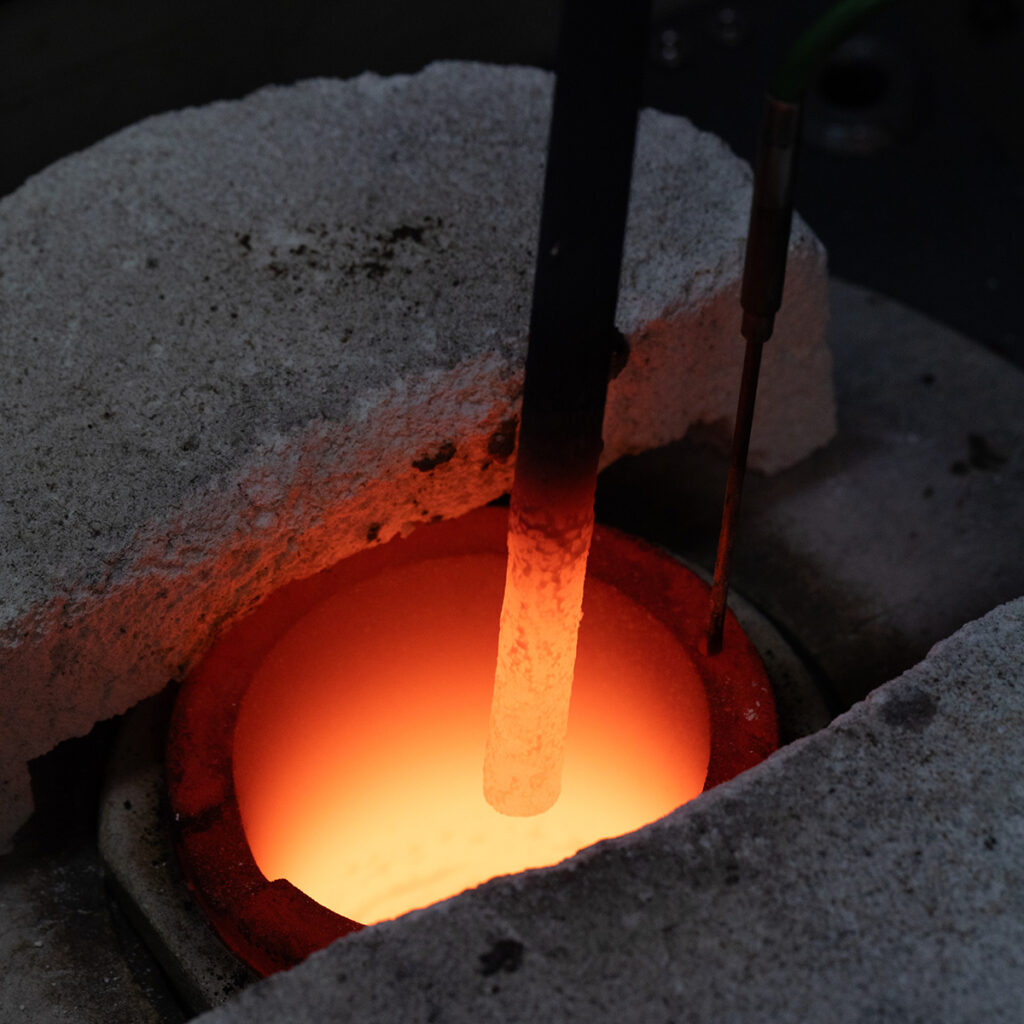
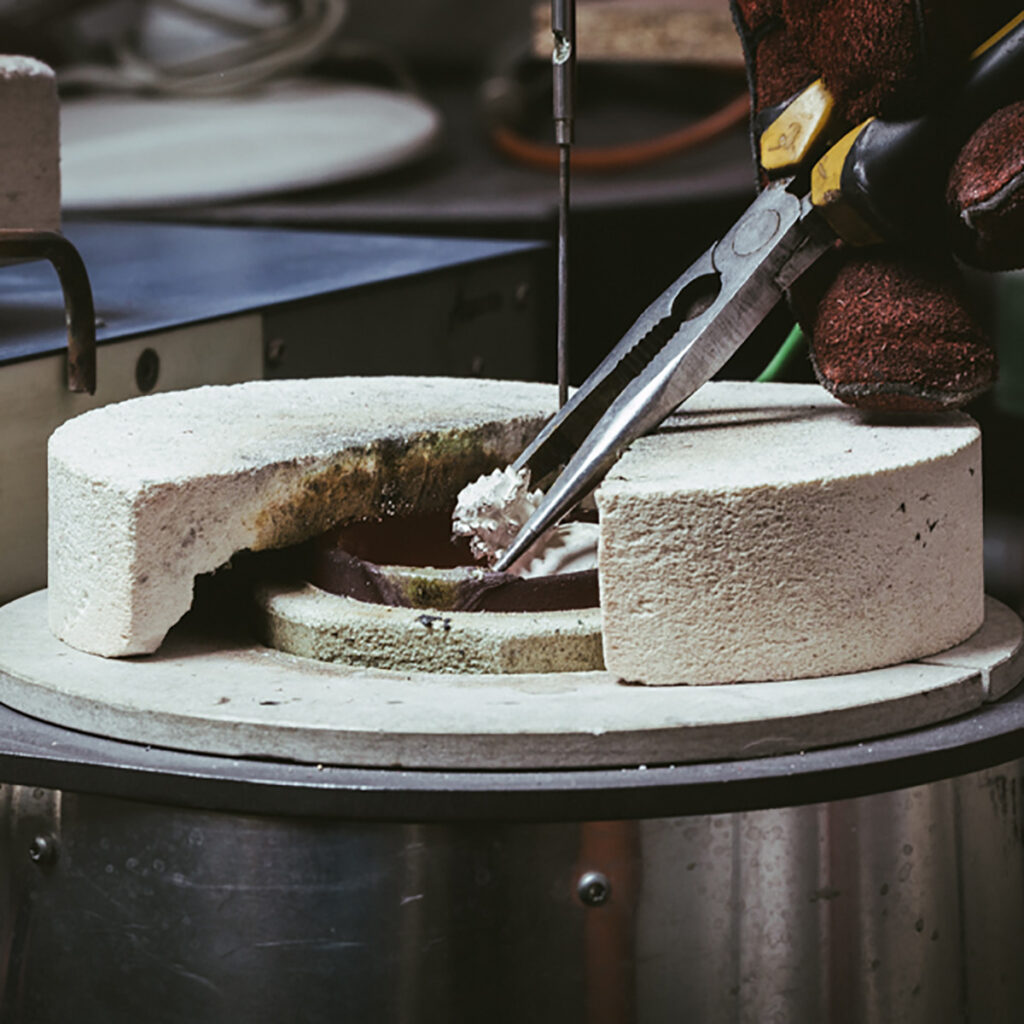
Furnace program: ramp temperature gradually to fully remove wax and preheat the mold (example targets: ~730°C for silver, ~850°C for gold, depending on metal alloy and investment).
Holding time (plateau) ~2 hours to ensure complete burnout and uniform mold heat.
Vacuum vs centrifugal casting: vacuum often reduces porosity in detailed small casting.
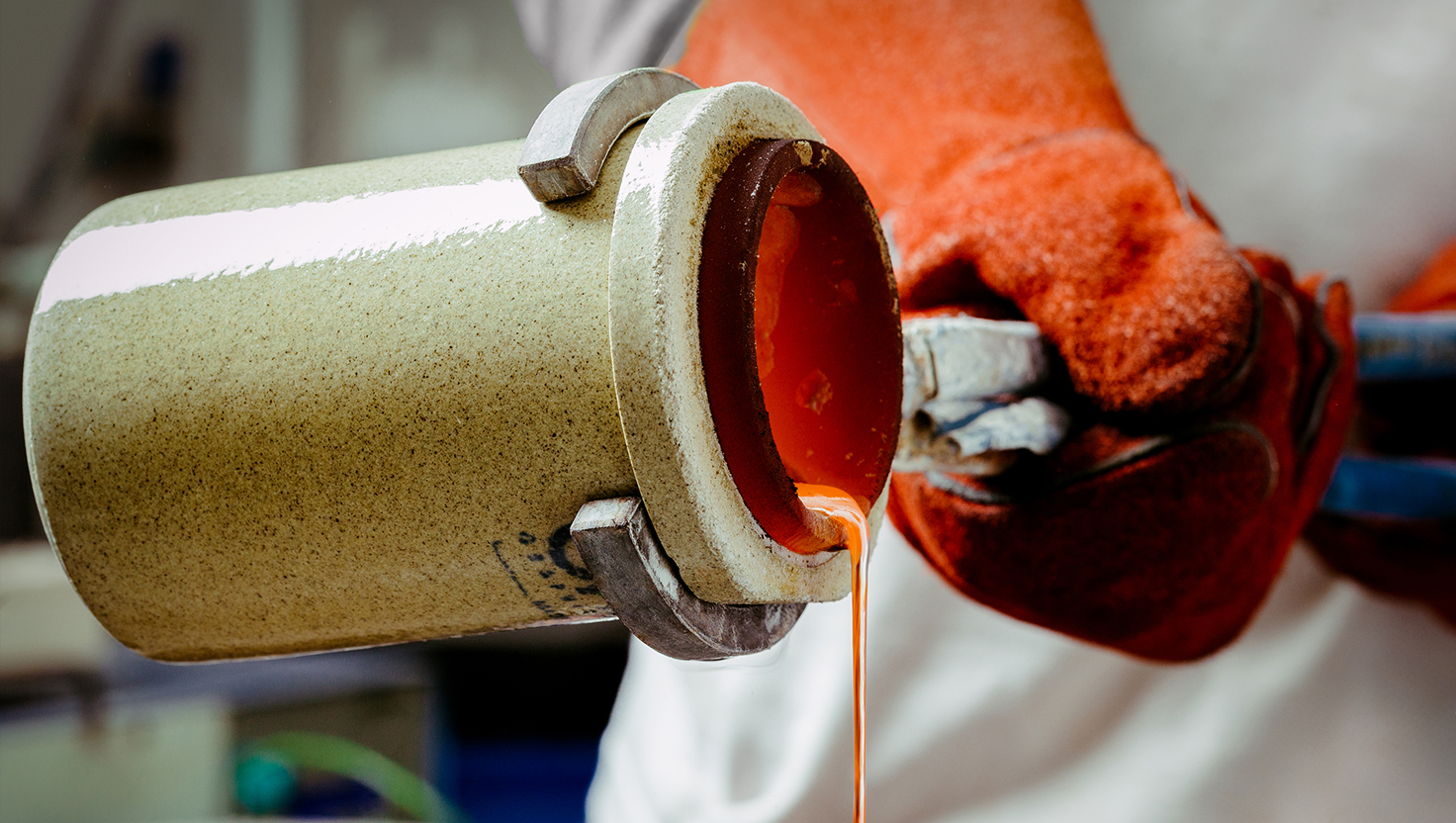
Quenching in water and/or dissolving investment residue to release the casting.
Key takeaway:
Correct burnout and fast, controlled pouring into a properly heated mold reduce porosity and improve surface quality.
MODULE 5: CUTTING, FINISHING AND POLISHING THE CASTING
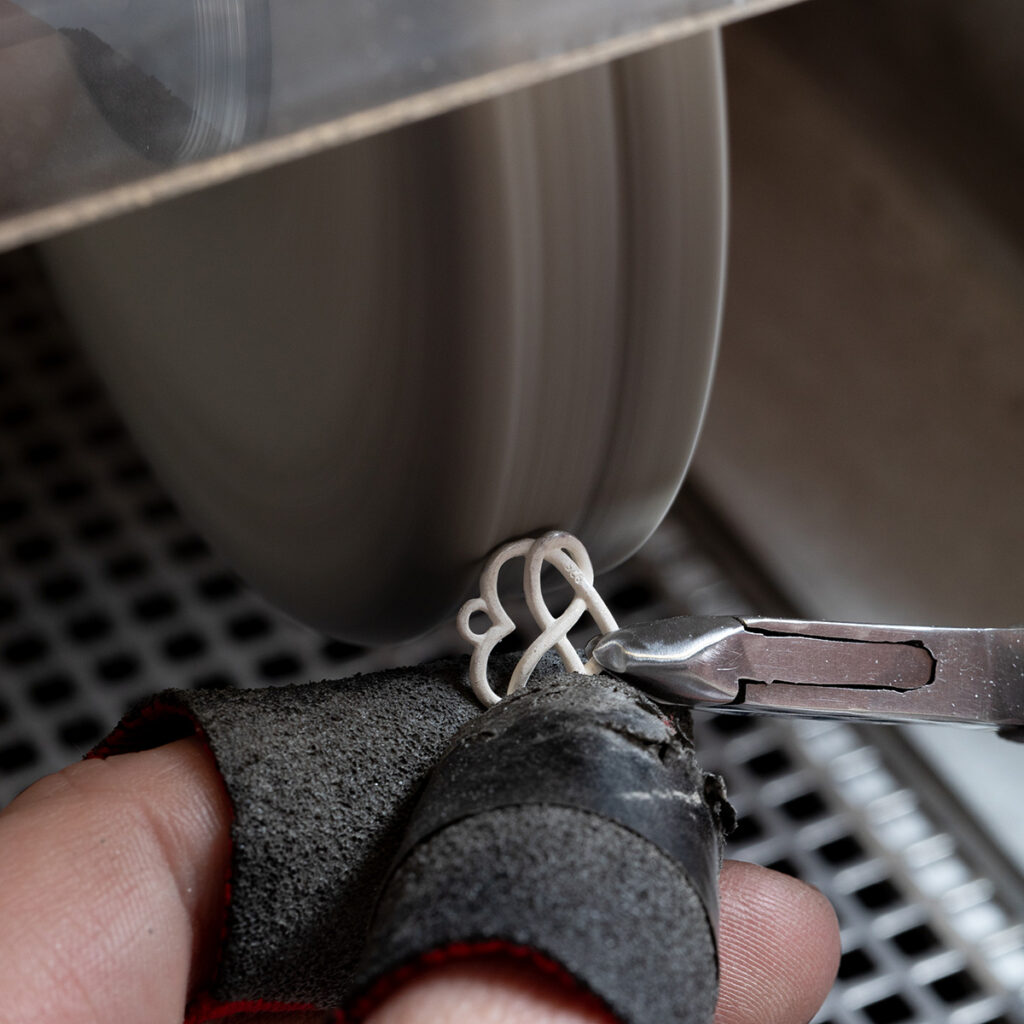
Cut off sprues and grind remnants with a carbide bur.
Pickling: removing oxides using a mild pickle solution (follow product safety instructions).
Polishing sequence: fiber wheel → felt with diamond compound → final shine on a leather wheel.
Quality control: 10× inspection for porosity, sharp edges, and surface defects.
Key takeaway:
Careful finishing is what makes cast jewelry look professional – and reduces rework time.
JEWELLERY MAKING COURSE SUMMARY
Lost wax casting (investment casting process) allows beginners and professional jewellery makers alike to translate complex shapes into silver or gold while keeping full detail. After these five modules – from wax carving through burnout to polishing – you can confidently implement the process in your workshop or foundry and create jewellery that impresses with precision and repeatability.
And remember: 925CRAFT, as a jewelry findings manufacturer, offers earring, necklace, bracelet, ring, and cufflink bases, plus chains, clasps, bails, jump rings, headpins, gemstones, beads, pearls, and crystals – so you can create a wide range of jewellery pieces. We also offer personalization by manufacturing components and finished jewellery based on the customer’s idea.
Want to know more?
- Find out: Swarovski FAQ – Part 2
- Read the article: Sterling silver spacer beads and balls
- Get inspired: Silver jewelry perfect for spring!
- Check also: Necklace chains for jewelry making
- Discover: Ear wires, studs, hoops or leverbacks? Find out which types of earrings are best for jewellery making