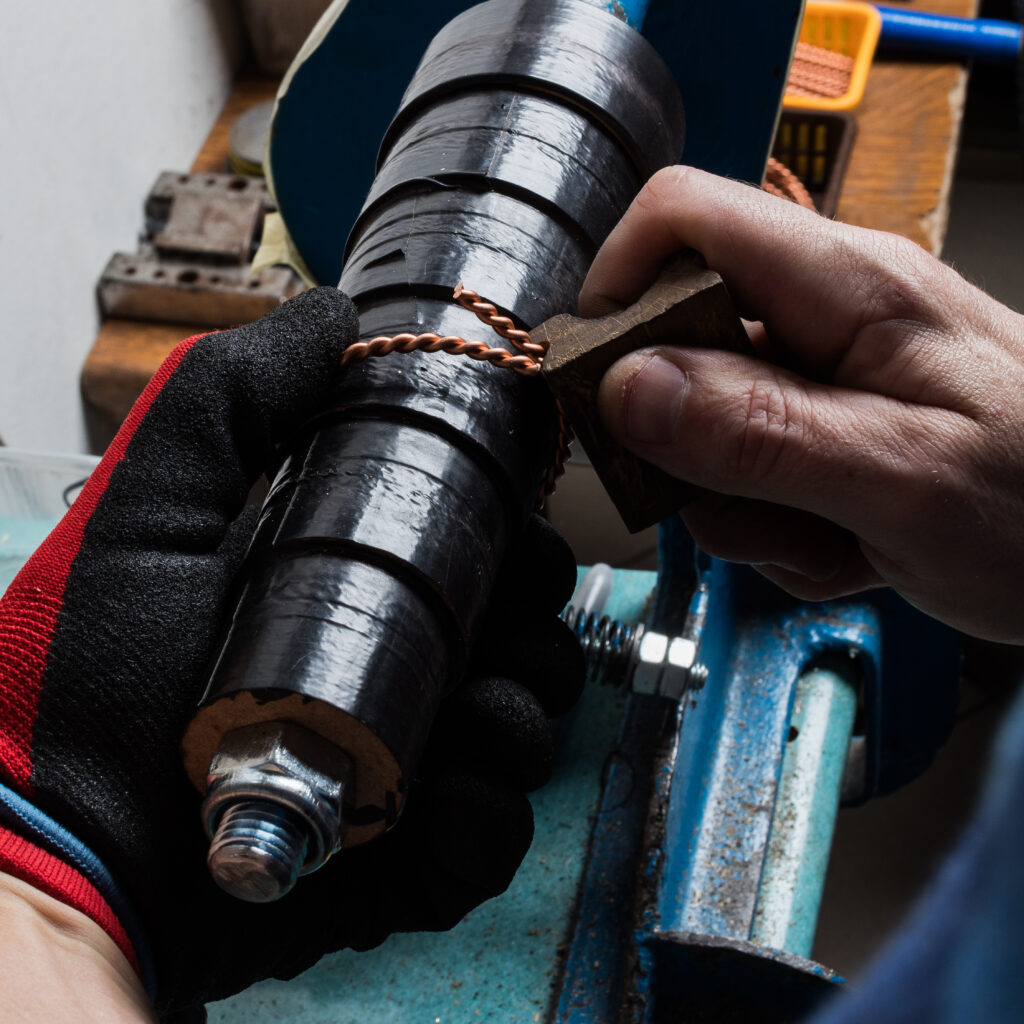
TRAINING 21: MANUAL VS. MECHANICAL JEWELRY PROCESSING
INTRODUCTION
Contents
- 1 INTRODUCTION
- 2 MODULE 1: MECHANICAL METALWORK – PRECISION, REPEATABILITY, EFFICIENCY
- 3 MODULE 2: REPOUSSÉ & CHASING – THE ART OF HAND EXPRESSION
- 4 MODULE 3: WHAT SHOULD YOU CHOOSE? COMPARING JEWELLERY MAKING TECHNIQUES
- 5 MODULE 4: PRECISION METALWORK — WHAT I RECOMMEND TO START WITH
- 6 CLOSING WORKSHOP
- 7 Want to know more?
- 8 Stay up to date
Welcome to this jewellery making course on comparing manual (handcrafted) and mechanical jewellery processing in silver and gold. Both approaches aim for the same result – manufacturing beautiful, high-quality unique jewellery pieces – but they get there in very different ways. Mechanical methods deliver repeatability and micron-level precision, while handwork brings unique character and the subtle “signature” of human creativity. When you understand how to combine these two worlds, you can choose the right technique for the project, budget, and customer expectations – without sacrificing quality or artistry.
Jewelry Training Goals
Define what mechanical jewelry processing is and which machines and software are most commonly involved (CNC, CAD/CAM, laser).
Explain hands-on decorative techniques such as repoussé and chasing, and when they outperform machines artistically.
Understand the role of jewellery tools – from a torch and hammer to a CNC mill – in building quality, consistency, and uniqueness.
Learn how to compare cost, time, precision, and artistic effect so you can confidently choose one method – or blend both in a single project.
This training is divided into 4 modules that guide you from the fundamentals of mechanical techniques, through the craft of handwork, to practical ways of combining both methods.
MODULE 1: MECHANICAL METALWORK – PRECISION, REPEATABILITY, EFFICIENCY
Mechanical jewelry making includes any technique where machines are used to shape, cut, or decorate metal.
The most common jewellery making methods include:
CNC milling – removing material with a milling head, ideal for creating forms, lettering, reliefs, and precise details.
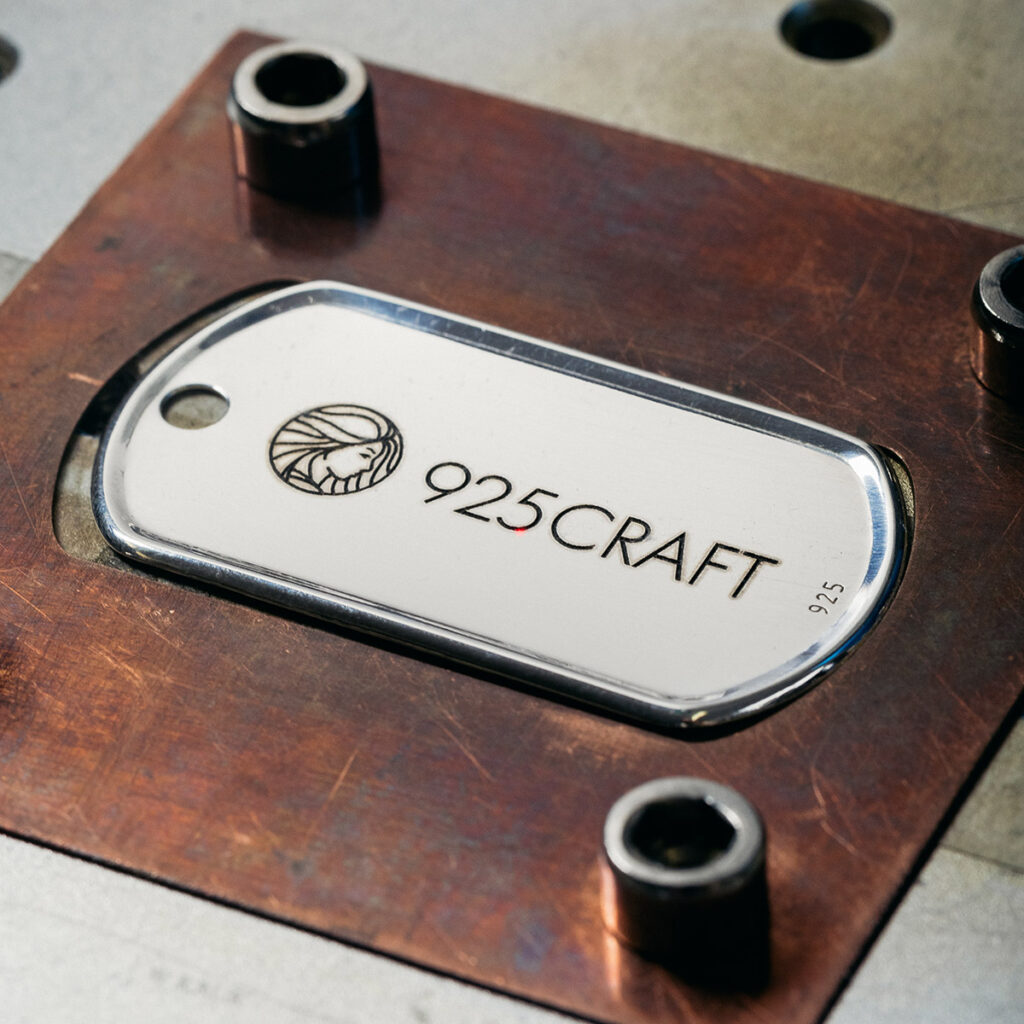
Laser engraving (laser marking) – fast, extremely precise, consistent, and repeatable.
CNC cutting + CAD/CAM technology – excellent for scalable production and commercial work.
Typical use cases
repeatable workflows in handmade jewelry production (small-batch or serial runs)
personalized jewelry with micron-level accuracy (names, dates, symbols, coordinates, logotypes)
commercial projects where time is money and consistency matters
Important note: Mechanical techniques can make jewellery look “perfect,” but they often reduce the organic uniqueness that comes from a human hand and tool marks.
MODULE 2: REPOUSSÉ & CHASING – THE ART OF HAND EXPRESSION
Repoussé (repoussé work)
A traditional hand jewelry making technique where you form a design by working from the back of a metal sheet using hammers and punches to push the metal outward.
Chasing
A complementary technique done from the front, refining details, building texture, and shaping highlights/shadows without removing material – creating depth and definition.
These techniques:
require feel, patience, and precise tool control
allow you to create jewellery with “soul” – truly one-of-a-kind
are time-consuming, but deliver an artistic effect that machines rarely replicate convincingly
Think of chasing as painting on metal: it’s not only skill – it’s artistic sensitivity.
MODULE 3: WHAT SHOULD YOU CHOOSE? COMPARING JEWELLERY MAKING TECHNIQUES
Criteria | Mechanical processing | Repoussé & chasing (handwork) |
|---|---|---|
Precision | Very high (CAD/CAM, laser) | Very high, depends on the hand |
Repeatability | Excellent | Low — every piece is different |
Time cost | Low in mass production | High |
Equipment cost | High (machines, software) | Lower (hand tools) |
Artistic effect | Technical, “perfect” | Emotional, individual |
Best use | Serial production, logos, personalization | Author jewelry, artistic pieces |
Key takeaway:
If you want consistent results at scale – mechanical jewellery making win. If you want expressive, collectible, signature pieces – handwork dominates. The best studios often use both.
MODULE 4: PRECISION METALWORK — WHAT I RECOMMEND TO START WITH
If you’re beginner jeweller:
Try both worlds. Start with a simple repoussé kit (hammer, punches, small anvil/block), but also explore CNC/laser services such as engraving jewelry with a precise motif or inscription.
Create mixed-tech jewellery designs – for example: a ring with a laser-engraved pattern and a hand-chased centerpiece.
Notice what brings you more satisfaction: the precision of technology – or the expressive freedom of handcraft.
Practical Task
Take a thin copper sheet.
Stamp a pattern using a punch from the back – repoussé.
Then use the same punch from the front – chasing.
Compare the results and ask yourself: which technique expresses you better?
CLOSING WORKSHOP
Manual or mechanical metalwork?
It doesn’t have to be a zero-sum choice. Both are powerful tools – and when you combine them, you can create unique jewellery pieces that are not only precise, but truly exceptional.
Join the full online course where we teach jewellery making step by step Jewelry making courses
And remember: 925CRAFT – as a manufacturer and wholesaler of jewellery supplies – also offers high-quality sterling silver 925 and gold 585 findings such as ear wires and earring posts, jewelry clasps, charms, pendants, chains by the meter for necklaces and bracelets, spacers, headpins, as well as crystals, pearls, beads, natural stones, and other essential jewellery making supplies.
Browse these materials in out online shop and create a wide range of earrings, bracelets, necklaces, rings, and also men’s jewelry such as cufflinks or heavier chain-style necklaces and other accessories.

Want to know more?
- Find out: GAVBARI pearls – how to make jewelry with pearls
- Read the article: Spring 2020 jewellery trends
- Get inspired: Gold findings for jewelry
- Check also: Sterling silver spacer beads and balls
- Discover: Infinity Pendant in Sterling Silver 925 & 14K Gold 585 – Necklace, Charm & More by 925CRAFT