
LESSON 6: JEWELRY COURSE VS. SELF-TAUGHT LEARNING – WHICH PATH IS RIGHT FOR YOU?
INTRODUCTION TO THE JEWELLERY MAKING COURSE
Contents
- 1. INTRODUCTION TO THE JEWELLERY MAKING COURSE
- 2. MODULE 1: JEWELRY BASICS AND PREPARATION FOR LEARNING
- 3. What Are Jewelry-Making Techniques?
- 4. MODULE 2: SELF-TAUGHT PATH – ADVANTAGES AND CHALLENGES
- 5. MODULE 3: ORGANIZED COURSES – ARE THEY WORTH IT?
- 6. MODULE 4: LEARNING STRATEGY & FIRST JEWELRY PROJECTS
- 7. SUMMARY – JEWELRY COURSE OR SELF-TAUGHT LEARNING?
- 8. Looking for Materials to Start?
- 9. Want to know more?
- 10. Stay up to date
Welcome to this comprehensive jewellery making course, designed to help you understand the two main paths for learning how to make jewelry: self-taught learning and structured jewellery courses (online or in-person). This guide will help you choose the best learning method based on your goals, budget, time availability, and preferred pace. The 925CRAFT jewellery making course can be completed entirely online from home, allowing you to read, practice, and experiment with various jewellery making techniques at your own convenience.
Jewellery Course Objectives:
Present the advantages and disadvantages of self-taught jewelry making vs. jewellery making classes.
Show how to effectively begin your jewellery making journey from scratch.
Provide practical guidance on how to develop your skills quickly and avoid common mistakes.
This beginner-friendly course is divided into 4 training modules, guiding you step by step through the foundations of jewellery making.
MODULE 1: JEWELRY BASICS AND PREPARATION FOR LEARNING
What Are Jewelry-Making Techniques?
Jewelry techniques include all skills and processes used in designing and making jewelry, such as:
bending and shaping metal
stone setting and gemstone mounting
These skills require precision, knowledge of precious metals, and familiarity with professional jewelry tools.
Essential Beginner Skills
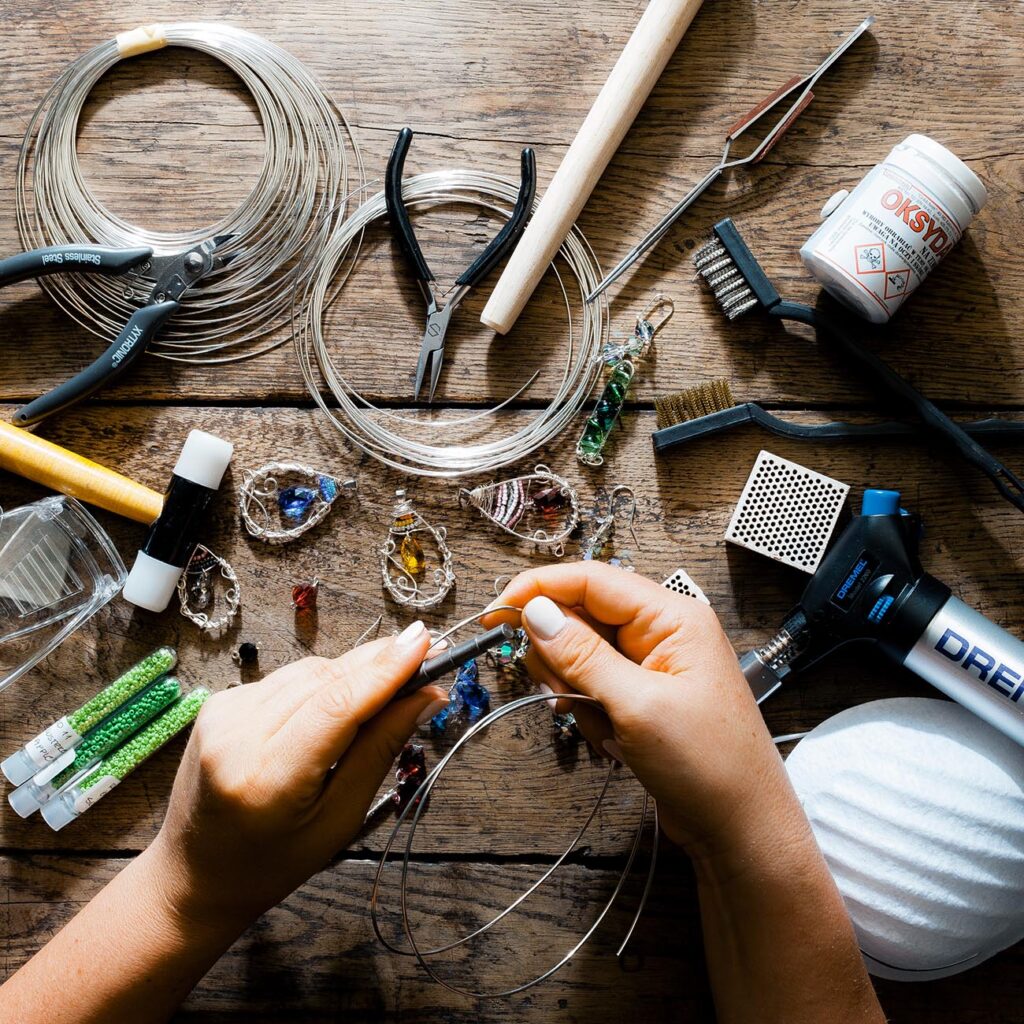
Manual dexterity: using basic range of tools such as a jeweler’s saw, torch, hammers, tweezers, files, and pliers.
Basic metal knowledge: gold, silver, platinum, palladium, alloys, karat systems, types of solder.
Patience and attention to detail: small mistakes significantly affect the final product.
Aesthetic sense: understanding form, balance, and design composition.
Setting Up Your Jewelry Workspace
A dedicated workbench or small jewelry table with proper lighting.
Essential jewelry tools: tweezers, saw frame, files, hammers, jeweler’s torch, pliers, mandrels.
Safety equipment: safety glasses, gloves, masks for chemicals, and proper ventilation.
MODULE 2: SELF-TAUGHT PATH – ADVANTAGES AND CHALLENGES
Benefits of Self-Taught Jewellery Making
Flexible schedule: learn at your own pace.
Lower costs: no course fees—only tools and materials.
Freedom to experiment: explore creative ideas without a fixed curriculum.
Challenges of Learning on Your Own
No instructor: mistakes may go unnoticed or become bad habits.
Information overload: you must evaluate tutorials, workshops, books, and videos yourself.
Slower progress: without guidance, some techniques are harder to master.
Tips for Effective Self-Study
Use reliable sources: recommended YouTube channels, professional jewelry blogs, expert tutorials.
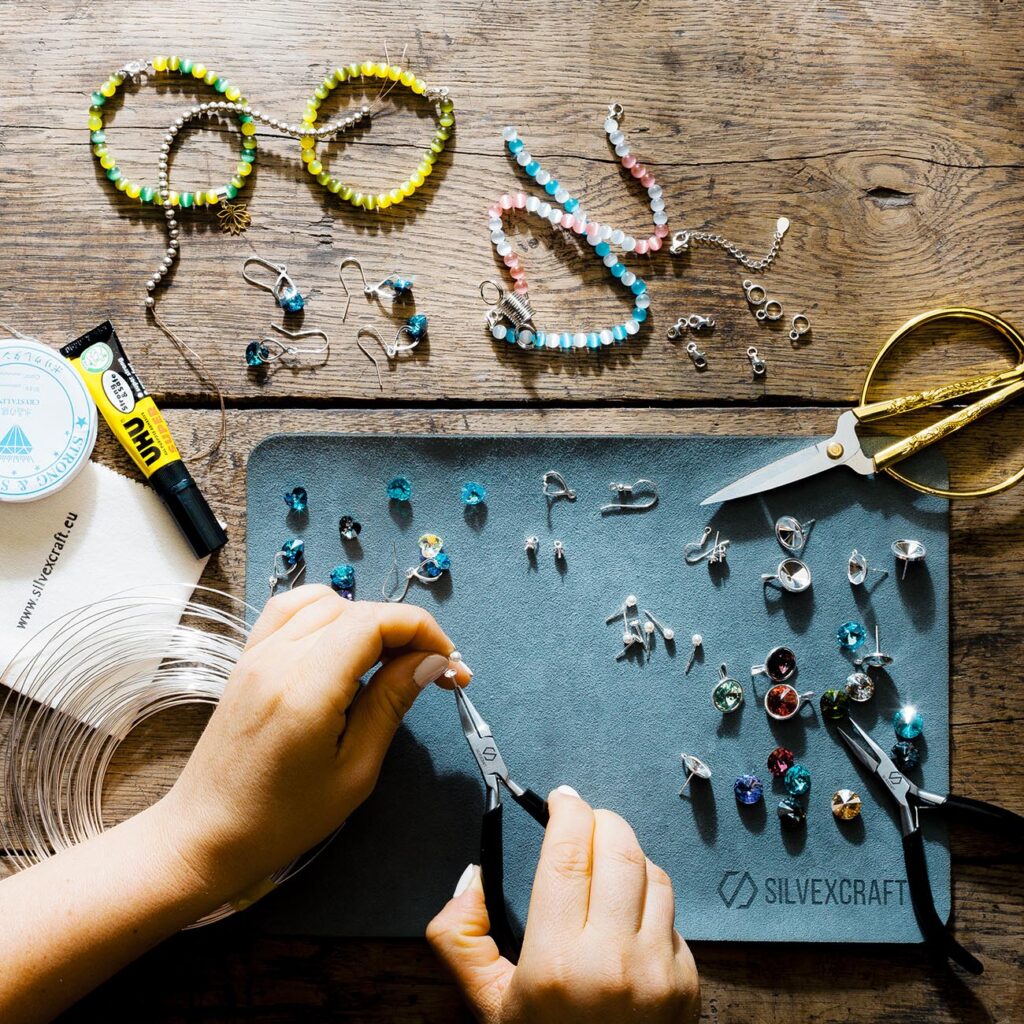
Begin with simple silver projects: creating basic own rings, simple soldering, pendants without gemstones, bending wires, threading beads.
Document your progress: photos, notes, problem lists, look for answers to your questions (jewelry forums and jewelry groups).
Book occasional online consultations with experienced jewelers if needed.
Treat it as a hobby.
MODULE 3: ORGANIZED COURSES – ARE THEY WORTH IT?
Advantages of Jewellery Courses
Direct instructor support: immediate correction of mistakes.
Structured curriculum: theory + practice in progressive steps.
Networking opportunities with other students.
Access to professional jewelry equipment and high-quality tools.
Disadvantages of jewellery making classes
Higher cost, especially advanced or intensive workshops.
Fixed schedule.
Group pace may not always suit your level.
Types of Courses
In-person courses in art schools, jewelry studios, or craft academies.
Online jewelry courses (live or pre-recorded video lessons).
Weekend workshops for fast-track learning of jewelry basics.
Choosing the Right Jewellery Making Course
Review the curriculum: soldering, silver clay forming, silver jewelry making, 3D jewellery design, stone setting.
Check instructor experience: active jewelers, awards, exhibitions.
Read reviews and student testimonials.
MODULE 4: LEARNING STRATEGY & FIRST JEWELRY PROJECTS
Hybrid Learning Model – The Best of Both Worlds
Take a short introductory jewelry course to learn foundations: safe soldering, tool handling, basic metalwork.
Then continue practicing at home using self-guided projects.
Use instructor consultations to solve technical problems and get professional feedback.
Your First Jewelry Projects
Basic rings, earrings, pendants made from 925 sterling silver.
Buy small amounts of silver at first; practice on scrap metal to reduce losses.
Learning Sequence:
Cutting and shaping
Soldering and forming
Polishing and finishing
Simple bezel setting (cabochons)
Developing Your Skills
Practice consistently.
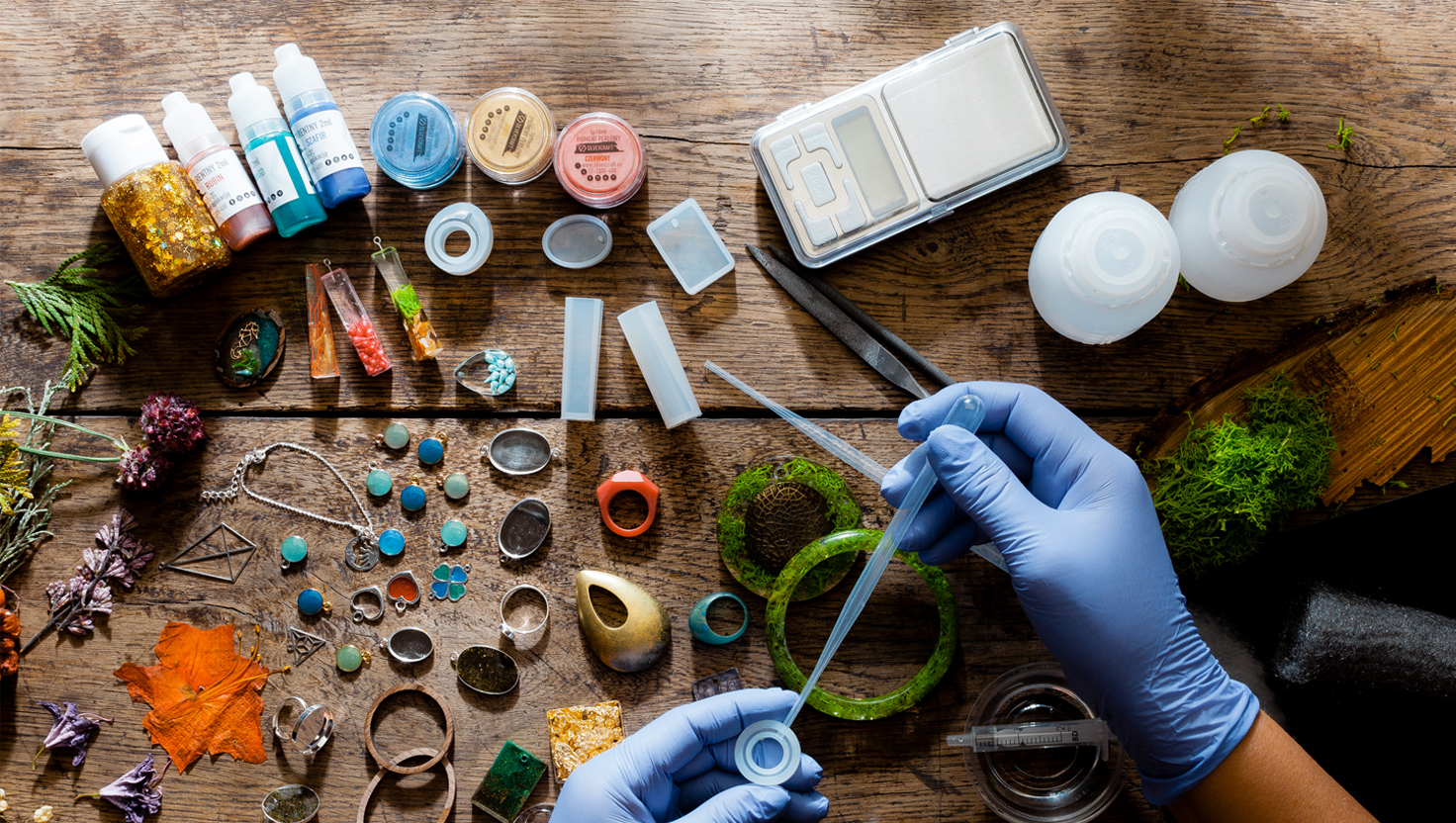
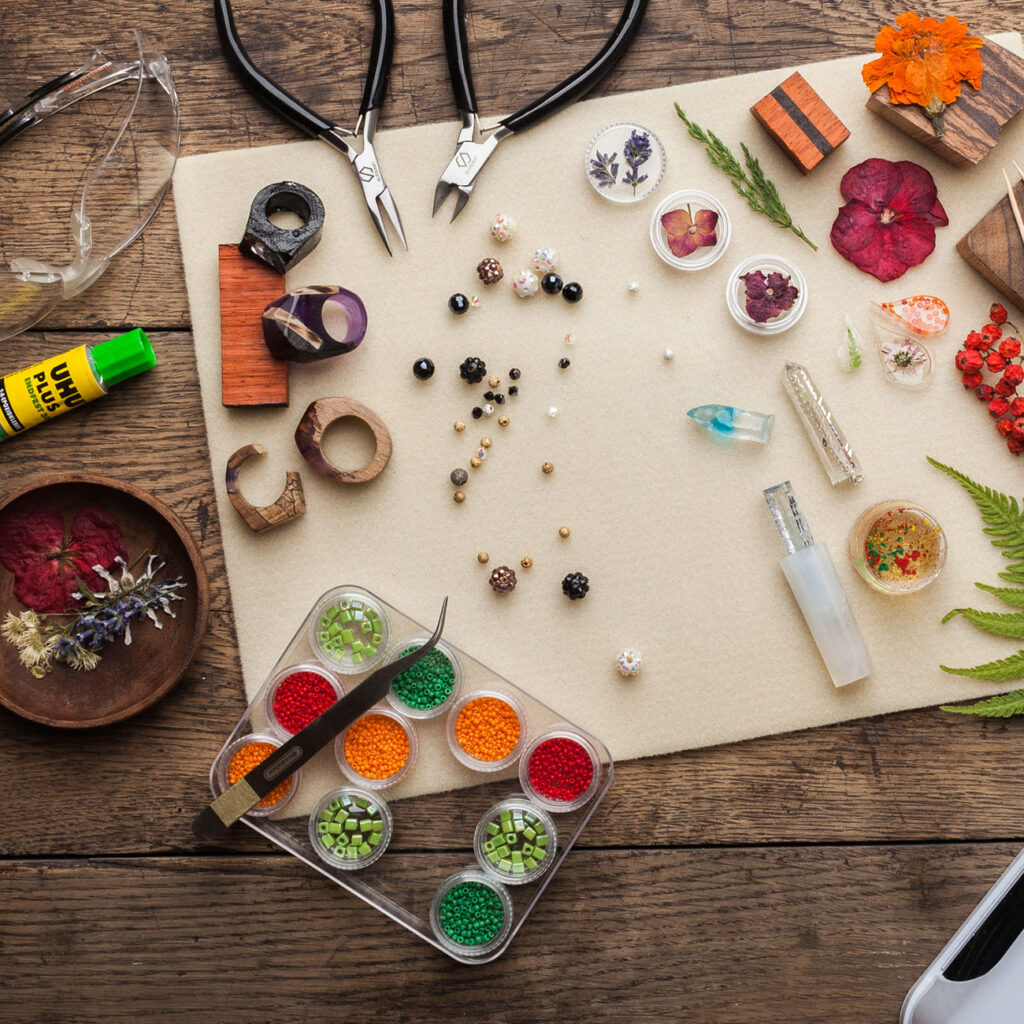
Explore new techniques: repoussé, engraving, enameling, filigree, epoxy resin, wire wrapping, stone settings, beading.
Stay inspired: follow jewelry designers, attend fairs and exhibitions.
Jewelry Community
Join online forums and jewelry groups.
Collaborate with other artisans and designers.
Participate in competitions for visibility and skill development.

SUMMARY – JEWELRY COURSE OR SELF-TAUGHT LEARNING?
Both paths offer value. Self-taught jewellery making is perfect for independent learners, but it requires discipline and resilience. Jewellery making classes provide structure, expert support, and faster skill development. Whichever path you choose, remember: Progress comes from practice, patience, and creativity. Start with simple projects, experiment with tools, and build confidence step by step.
Looking for Materials to Start?
Explore the 925CRAFT collection of high-quality jewelry components, including: jump rings, ring-making supplies, eye pins, stone settings, earring findings, clasps, bracelet chains, pendants, charms, necklace parts, gemstones, pearls, crystals, chains by the meter, wires, soldering components, and other silver findings and gold findings for beginners and professionals.
Want to know more?
- Find out: What is felting?
- Read the article: Fashionable chain jewellery
- Get inspired: Spring 2020 jewellery trends
- Check also: How to use silver hoop earring findings – part 1
- Discover: Silver hoop earrings in a new version – part 2