
TRAINING 11: HOW TO SOLDER JEWELRY PROPERLY – AVOID DISCOLORATION AND UNEVEN JOINTS
Introduction to the Online Course
Contents
- 1 Introduction to the Online Course
- 2 MODULE 1: Surface Preparation and Material Selection
- 3 MODULE 2: Soldering Tools and Conditions
- 4 MODULE 3: Jewellery Soldering Technique – Step by Step
- 5 MODULE 4: Finishing, Discoloration Removal, and Jewellery Quality Control
- 6 TRAINING SUMMARY
- 7 Want to know more?
- 8 Stay up to date
Welcome to this professional soldering jewelry workshop, designed to explain the key principles of proper sterling silver and gold soldering (with techniques applicable to other metals as well). Jewelry soldering is one of the most important jewelry making techniques, as it allows you to permanently and cleanly join individual jewellery making supplies into a cohesive design.
Correct soldering ensures both aesthetic quality and long-term durability. Every stage of the soldering process must be carefully controlled to avoid common problems such as discoloration, porosity, weak joints, or uneven surfaces. In this jewellery making tutorial, you will learn the differences between soft and hard soldering, proper heat control, and finishing techniques that lead to clean, professional jewellery design.
Jewellery Making Course Objectives
Learn how to properly prepare and clean metal surfaces for soldering
Understand how to choose the right solder and flux
Master heat control to prevent oxidation and discoloration
Learn how to clean, finish, and inspect solder joints
This jewelry training is divided into 4 modules, guiding you step by step toward smooth, durable, and visually clean solder joints.
MODULE 1: Surface Preparation and Material Selection
Surface Cleanliness
To avoid uneven solder flow and discoloration, all surfaces must be perfectly clean.
Remove grease, dust, and oxides using fine sandpaper (600–800 grit), alcohol, or professional degreasers.
When working with fine silver, surface preparation is especially critical.
Choosing the Right Solder
Match the solder to the metal and alloy:
Silver solder: hard, medium, or easy solder (different melting temperatures)
Gold solder: matched to karat (14K, 18K) and color (yellow, white, rose)
Higher-melting solders create stronger joints but increase the risk of overheating and discoloration.
Lead-free solders are recommended for safety and professional standards.
Flux (Soldering Flux)
Flux prevents oxidation and helps the solder flow evenly.
Use flux appropriate for silver or gold jewellery (borax-based or dedicated pastes).
Apply a thin, even layer—too much flux can contaminate the joint.
Fitting the Jewellery Components
The tighter the fit, the less solder is needed.
Gaps should be minimal—large gaps cause excess solder buildup and uneven joints.
Conclusion:
Clean metal surfaces and the correct combination of solder and flux are the foundation of strong, clean jewellery soldering.
MODULE 2: Soldering Tools and Conditions
Torch and Heat Source
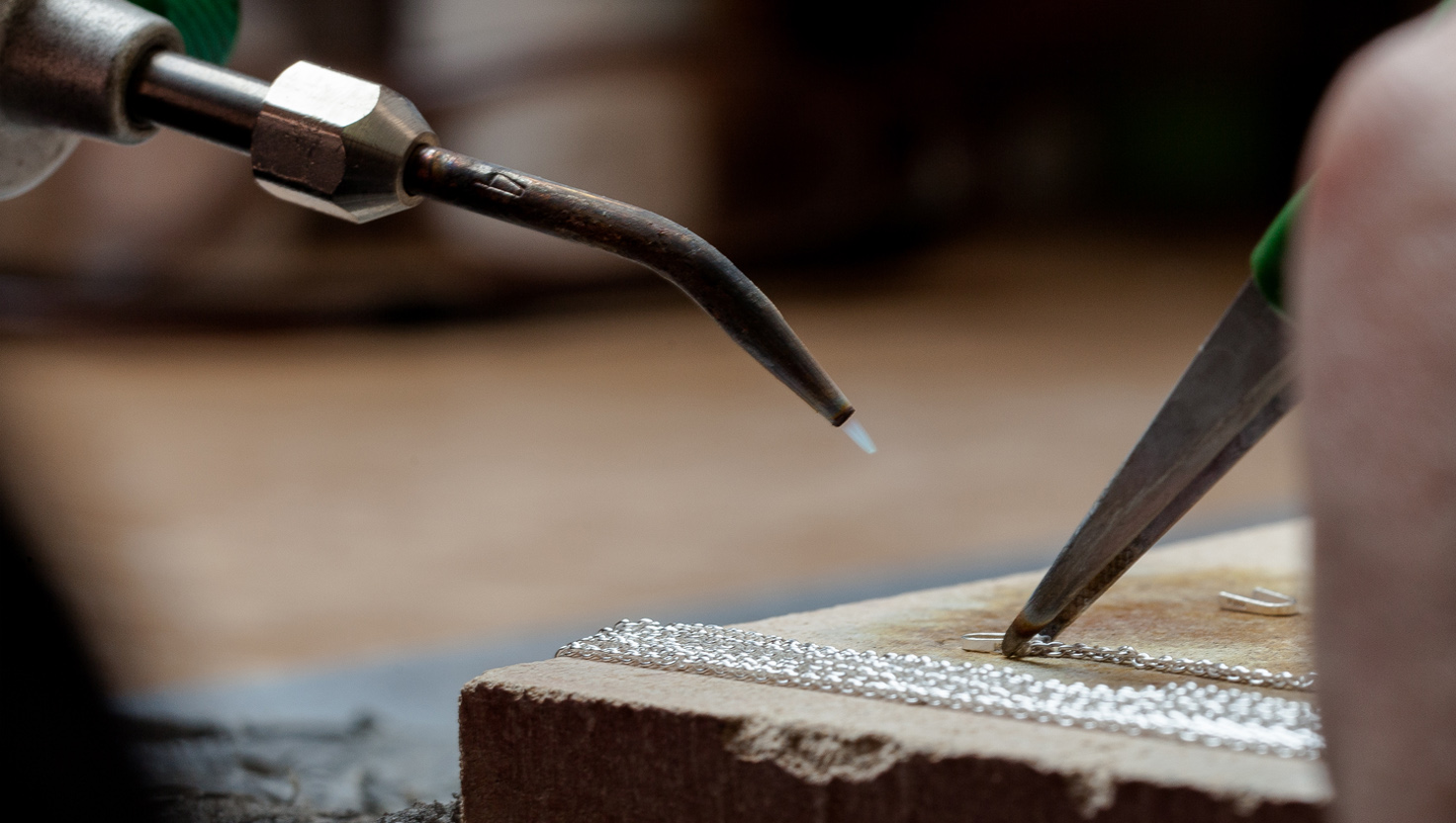
For most sterling silver and gold soldering, a butane torch is sufficient.
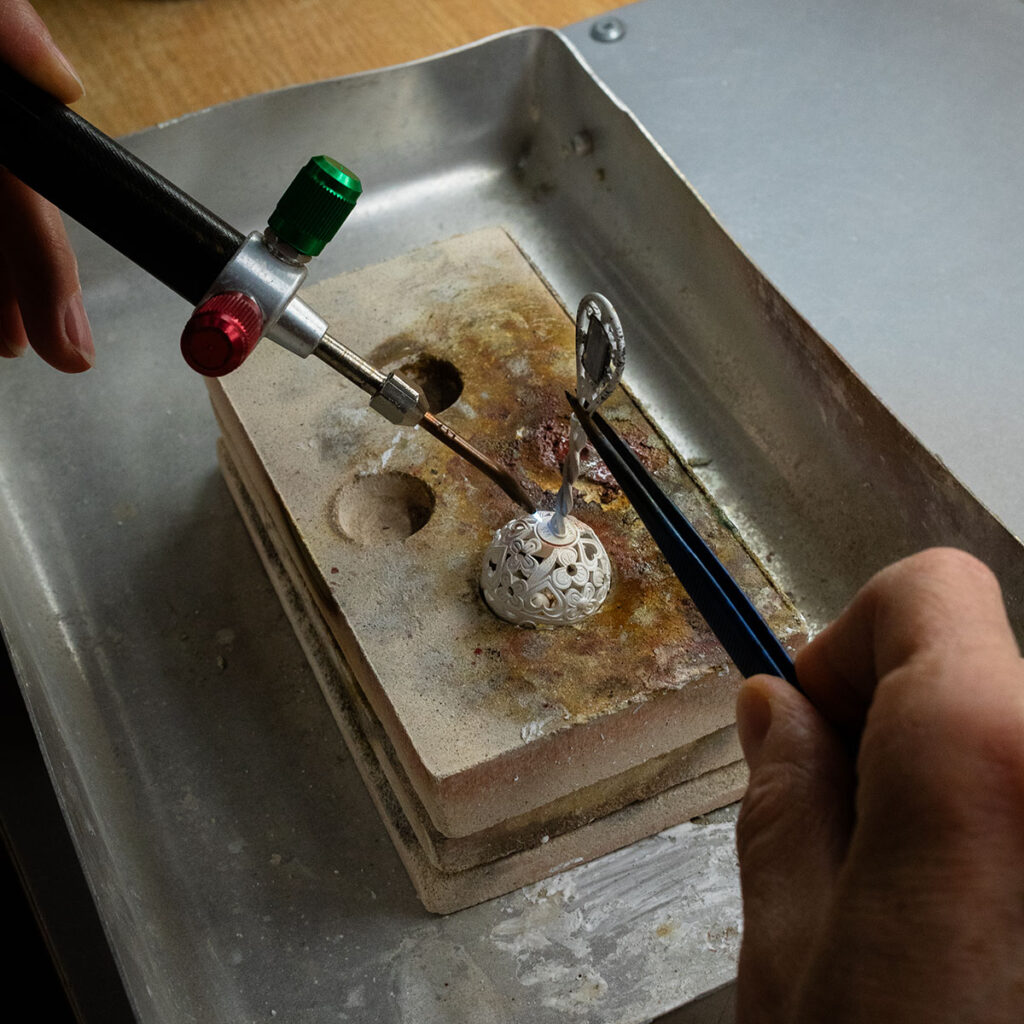
For advanced jewellery making, an oxygen–gas torch provides better temperature control.
Use a neutral or slightly reducing flame to avoid oxidation and surface discoloration.
Fireproof Surfaces
Always solder on fire-resistant blocks such as charcoal, ceramic, or firebrick.
These materials support even heat distribution and stable positioning.
Supporting Soldering Tools for Jewelry
Use soldering tweezers, soldering picks, and third-hand holders to keep jewellery findings stable.
A stable setup prevents movement during heating metals and improves joint quality.
Ventilation and Safety
Soldering produces fumes from flux and metal oxides.
Work in a well-ventilated area and wear protective eyewear.
Conclusion:
Professional tools and proper working conditions directly influence solder joint quality and safety.
MODULE 3: Jewellery Soldering Technique – Step by Step
Applying Flux and Solder
Apply flux evenly to the joint area.
Place small solder snippets or apply solder paste precisely where needed.
Both hard soldering and low-temperature soldering can be used depending on the task.
Even Heating
Heat the entire piece gradually, not just the solder area.
Uneven heating causes discoloration, warping, and poor solder flow.
Avoid focusing the flame directly on the solder for too long.
Watching the Melt
The solder will suddenly flow and flash when the correct temperature is reached.
As soon as the solder flows into the joint, reduce or remove heat.
Overheating leads to oxidation, dark stains, and surface damage.
Cooling and Pickling
Allow the piece to cool naturally or quench if appropriate.
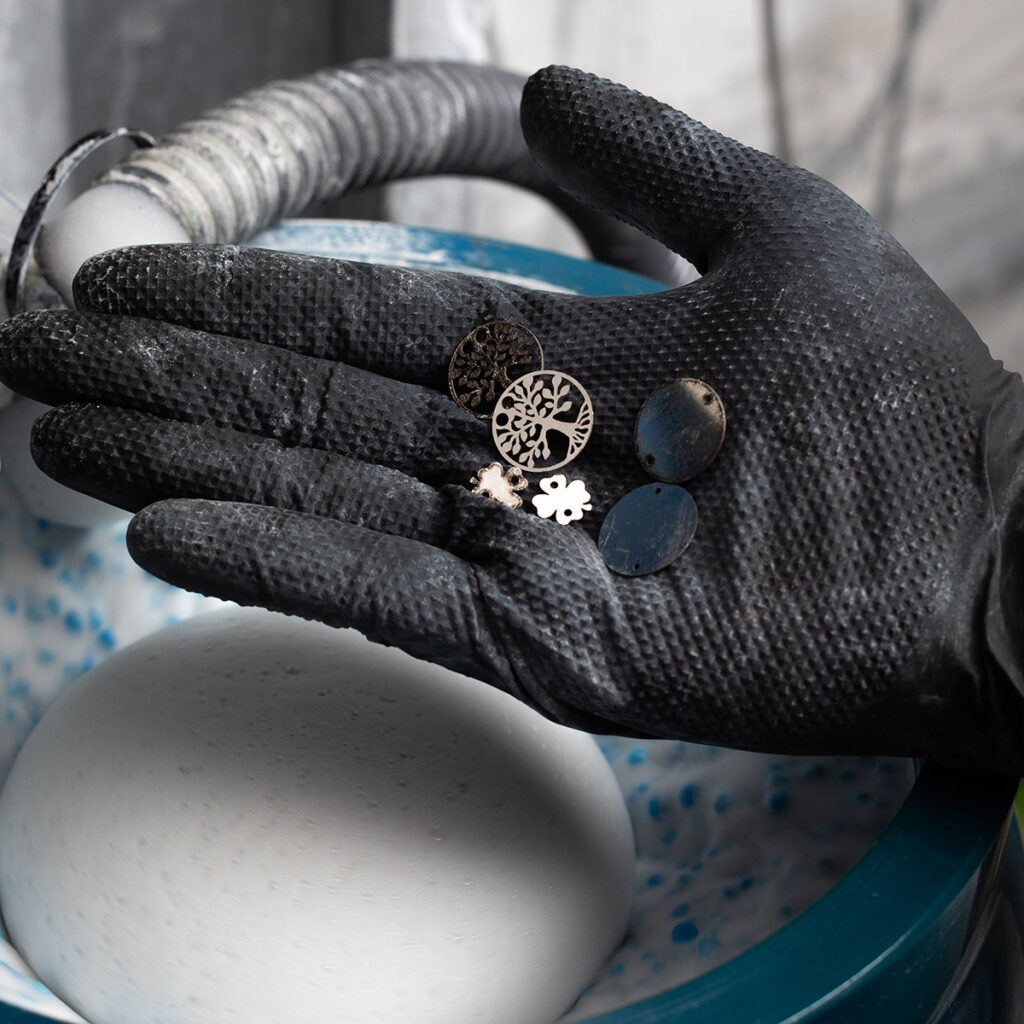
Clean in a pickle solution to remove oxides and flux residue.
Rinse thoroughly and dry.
Conclusion:
Controlled heating and precise timing are the keys to smooth, clean solder joints without discoloration.
MODULE 4: Finishing, Discoloration Removal, and Jewellery Quality Control
Removing Oxidation from Metal
Pickling removes most oxidation, but avoid overexposure.
Use fine abrasives or brass brushes if residue remains.
Mechanical Finishing and Jewellery Polishing
Smooth excess solder with files or sandpaper.
Polish using appropriate compounds and felt wheels.
Ultrasonic cleaning helps remove polishing residues from tight areas.
Inspecting the Joint
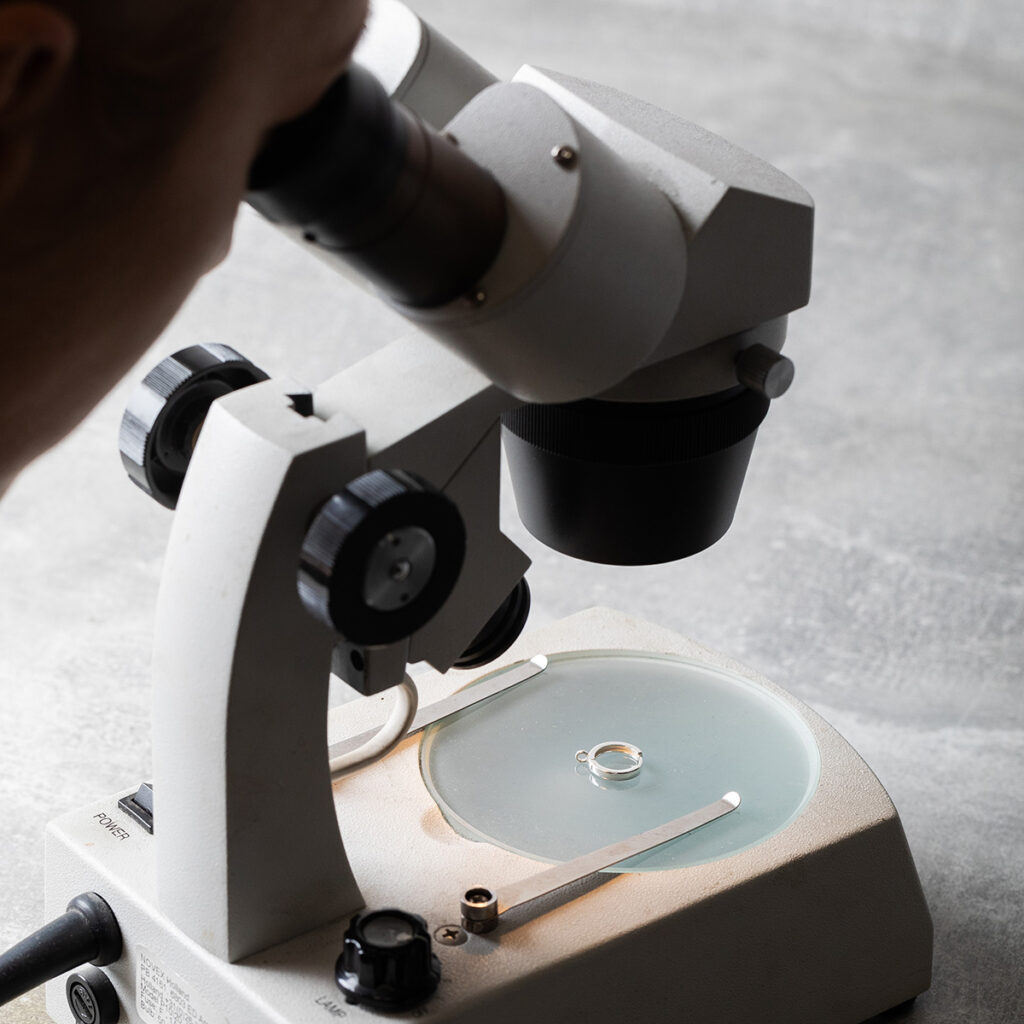
Examine solder joints under a jeweller’s loupe (10×).
Look for porosity, cracks, or weak bonding.
Light tapping can reveal weak connections.
Correcting Defects
Small flaws can be fixed with additional solder and reheating.
Avoid repeated reheating in the same area to prevent metal fatigue.
Conclusion:
Careful finishing and inspection ensure professional-quality jewelry soldering results.

TRAINING SUMMARY
Preparation: clean surfaces, correct solder, proper flux
Tools & Conditions: suitable torch, fireproof surface, ventilation
Technique: even heating, precise timing, controlled cooling
Finishing: pickling, polishing, and quality inspection
By applying these principles and jewellery making tips, your gold and silver soldering will produce clean, durable, and visually flawless jewelry joints. Remember—creating jewellery by soldering is a skill refined through practice. With experience, your control, precision, and results will continue to improve. At 925CRAFT you will find many jewellery findings created by soldering such soldered jump rings, bases for stone setting, earring findings, cufflinks, rings, pendants, chains for necklaces and bracelets and many more!
Good luck mastering professional jewelry soldering techniques!
Want to know more?
- Find out: How to Make Charm Bracelets and Bead Bracelets
- Read the article: Jewelry services – electroplating silver and gold
- Get inspired: Silver jewelry perfect for spring!
- Check also: Handmade jewellery. Something that is worthing or not?
- Discover: How to make jewelry for communion