TRAINING 12: DIFFERENCES IN PROCESSING AND SOLDERING SILVER VS GOLD JEWELRY
INTRODUCTION
Contents
- 1 INTRODUCTION
- 2 MODULE 1: FOUNDAMENTAL DIFFERENCES BETWEEN SILVER AND GOLD
- 3 MODULE 2: PROCESSING SILVER VS GOLD – TOOLS AND TECHNIQUES
- 4 MODULE 3: SOLDERING SILVER VS GOLD – MATERIALS AND TEMPERATURES
- 5 MODULE 4: PRACTICAL TIPS AND COMMON MISTAKES WHEN MAKING JEWELLERY
- 6 FINAL SUMMARY OF JEWELLERY MAKING WORKSHOP
- 7 Want to know more?
- 8 Stay up to date
Welcome to jewellery making courses focused on the key differences between working with silver and gold, particularly in metal processing and soldering techniques. Although both precious metals are widely used in jewellery making, their physical, chemical, and thermal properties require different approaches during jewelry fabrication. Understanding these differences is essential for jewellers who want to create durable, high-quality, and visually refined fine jewellery.
Silver and gold are among the most valued precious metals in jewelry production. Jewellers use both silver and gold jewelry making supplies, wire, sheet metal, and cast elements to create own rings, necklaces, earrings, bracelets, and other custom jewelry findings. To ensure consistent quality and material stability, it is always recommended to source precious metals from trusted manufacturers such as 925CRAFT.
Training objectives:
Understand the core differences between silver and gold in jewellery manufacturing and soldering
Learn how precious metal properties affect shaping, annealing, and joining
Choose the right tools, solders, and fluxes for each metal
Avoid common mistakes when working with silver and gold
MODULE 1: FOUNDAMENTAL DIFFERENCES BETWEEN SILVER AND GOLD
Composition and metal purity
Silver: Most commonly used as sterling silver 925 (92.5% silver, 7.5% copper)
Gold: Available in multiple karats (9K, 14K, 18K, 22K, 24K) and colors (yellow gold, white gold, rose gold), which significantly affect hardness and melting temperature
Melting temperatures
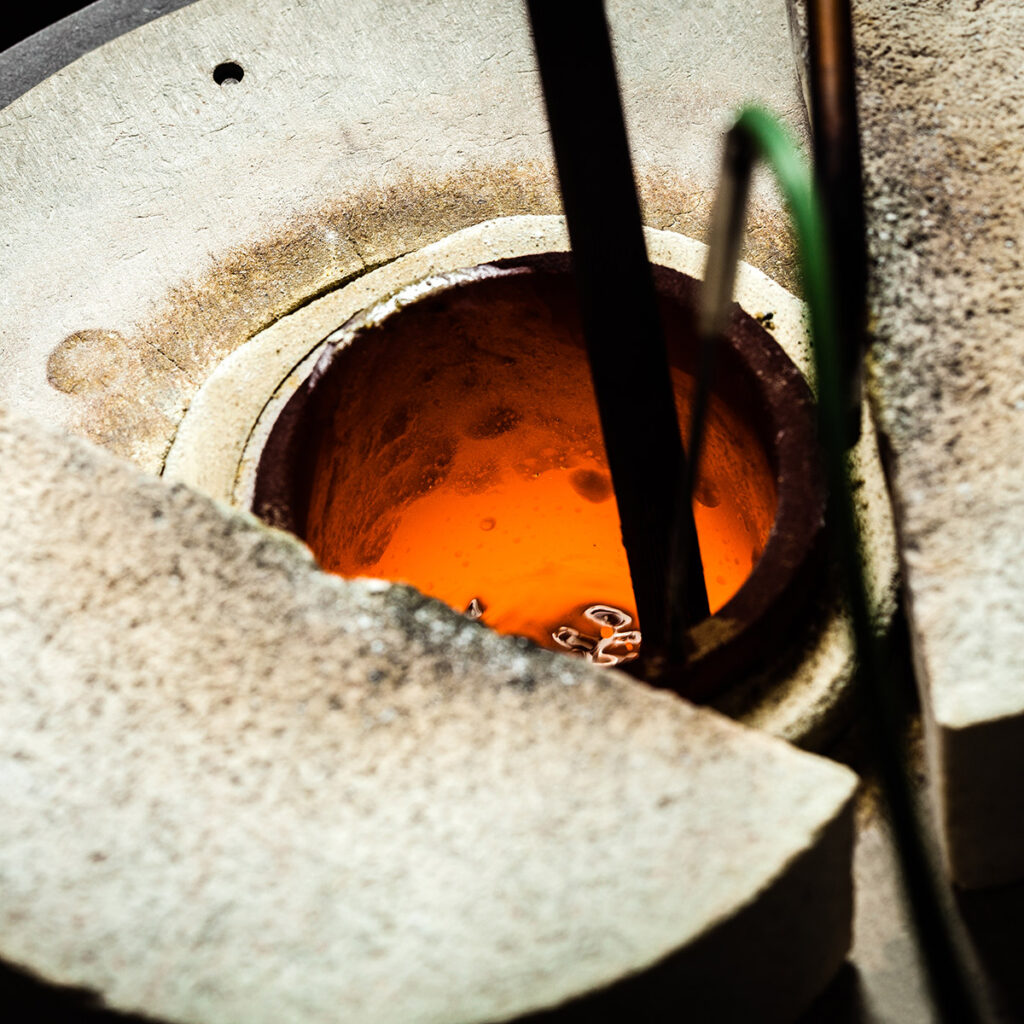
Sterling silver (925): approx. 893–900°C
Gold:
14K: ~830–850°C
18K: ~900–950°C
24K: 1064°C
These differences directly influence soldering technique and heat control.
Chemical reactivity
Silver reacts easily with sulfur compounds, leading to oxidation and tarnish
Gold is highly resistant to oxidation and discoloration
Aesthetic and practical use
Silver: popular for everyday jewellery due to affordability and bright color
Gold: associated with luxury, durability, and long-term value
Conclusion:
Metal composition and thermal behavior determine how silver and gold must be processed and soldered.
MODULE 2: PROCESSING SILVER VS GOLD – TOOLS AND TECHNIQUES
Plasticity and hardness
Silver 925 is softer and work-hardens quickly
Gold alloys vary significantly; white gold (especially nickel-based) is harder and more resistant to forming
Annealing
Silver: requires frequent annealing (540–650°C)
Gold: annealing temperature depends on karat (typically 600–700°C)
Cutting and shaping precious metals
Silver conducts heat faster, requiring gentler tool pressure
Gold alloys may require higher-quality cutting tools
Grinding and polishing
Silver heats up quickly and can lose surface consistency
Gold polishes more evenly but requires clean polishing compounds to avoid color contamination
Conclusion:
Although similar tools are used, silver and gold require different handling, heat control, and timing.
MODULE 3: SOLDERING SILVER VS GOLD – MATERIALS AND TEMPERATURES
Choosing the right solder
Silver solder: hard, medium, easy solder (lower temperature = weaker joint)
Gold solder: matched to karat and color to ensure invisible joints
Soldering temperature
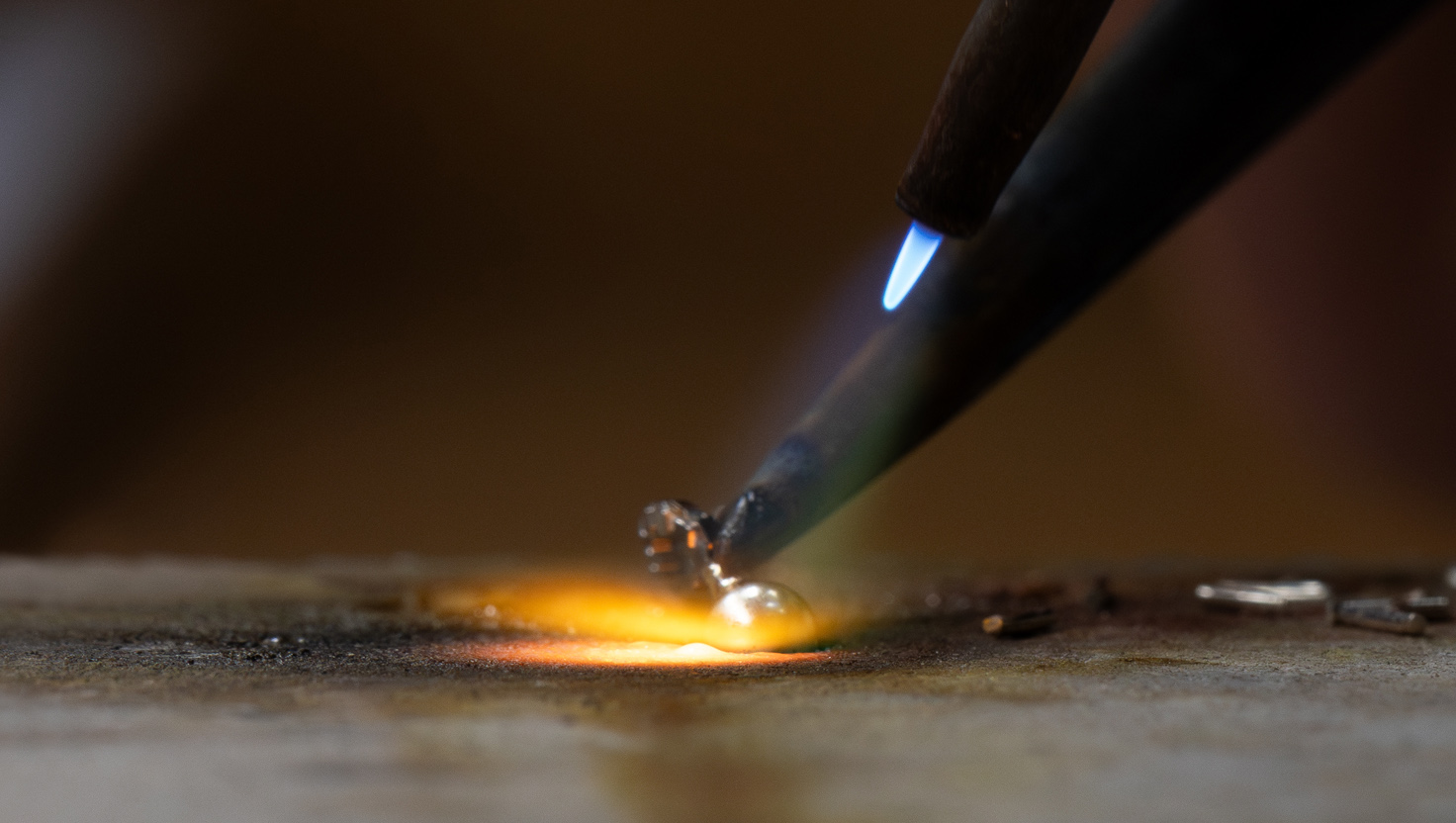
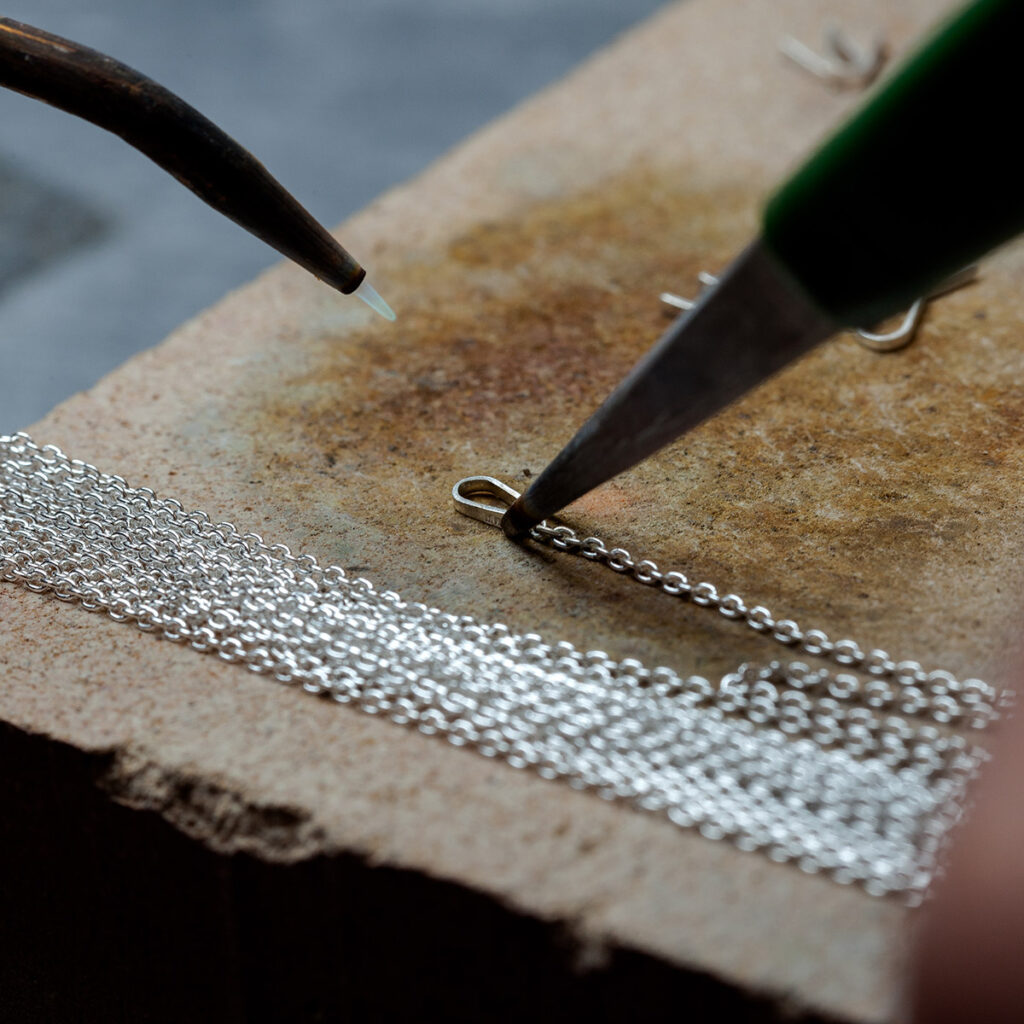
Silver soldering temperature: approx. 650–780°C
Gold soldering temperature: typically 700–900°C depending on alloy
Flux selection
Silver: borax-based or commercial silver flux
Gold: dedicated gold flux resistant to higher temperatures
Thermal conductivity
Silver conducts heat extremely fast → requires broad flame
Gold heats more slowly → easier heat targeting, but risk of discoloration in white gold
Conclusion:
The jewelry soldering techniques remain similar, but temperature control and material matching are critical.
MODULE 4: PRACTICAL TIPS AND COMMON MISTAKES WHEN MAKING JEWELLERY
Metal preparation
Always clean and degrease metal surfaces
Ensure tight fitting joints
Avoiding overheating
Silver: diffuse flame to prevent melting edges
Gold: control heat carefully, especially with white gold
Finishing
Silver usually requires immediate pickling and polishing
Gold is more forgiving but still benefits from proper finishing
Common mistakes
Wrong solder color for gold
Uneven heating
Insufficient annealing during processing
Conclusion:
Mastery comes from practice and adapting technique to each metal’s unique behavior.
FINAL SUMMARY OF JEWELLERY MAKING WORKSHOP
Silver and gold differ in composition, heat conductivity, and workability, which directly affects how they are processed and soldered in professional jewellery making. While the core techniques remain similar, each metal requires precise temperature control and an individual approach developed through practice and experience.
Choosing the right solder and flux is essential for creating clean, durable joints, whether you are working on fine stone setting or structural elements of a jewellery design. In a well-organized jewellery workshop, careful preparation, heat awareness, and attention to detail are the foundation of high-quality results.
For every jewellery maker — especially a beginner — systematic learning through a structured course, combined with hands-on practice, helps build real skills and technical knowledge. This applies both to hobby projects and to developing a professional jewellery business with a broad range of techniques and materials.
By learning jewellery courses online, experimenting in your own workshop, and continuously refining your approach, you develop confidence and craftsmanship. With time, you will naturally feel the differences between these precious metals and learn how to use them to their full potential, transforming knowledge into skill and skill into professional-quality jewellery.
Remember that at 925CRAFT you will find wide range of ready jewellery supplies and gemstones for making earrings, necklaces, bracelets, ring and many more jewellery accessories. We also offer many many jewelry services such as castings, laser cutting, engraving, and plating precious metals with gold, rhodium, ruthenium and platinum.

Want to know more?
- Find out: Ring blanks – design stylish jewellery for hands – part 2
- Read the article: How to make string bracelets – a guide for jewelry makers from 925CRAFT
- Get inspired: Semi-precious stones and crystals from GAVBARI
- Check also: Swarovski pearls – beauty, durability and innovation
- Discover: Gemstone beads for jewellery making