TRAINING 22: JEWELRY TOOL MAINTENANCE & CARE
INTRODUCTION
Contents
- 1. INTRODUCTION
- 2. MODULE 1: WHY JEWELLERY TOOL CARE MATTERS
- 3. MODULE 2: TOOL CATEGORIES & THEIR MAINTENANCE NEEDS
- 4. MODULE 3: WORKSHOP ORGANIZATION & ENVIRONMENT
- 5. MODULE 4: DAILY & PERIODIC MAINTENANCE ROUTINE
- 6. MODULE 5: COMMON JEWELRY TOOLS MAINTENANCE MISTAKES
- 7. MODULE 6: STARTER KIT FOR JEWELLERY TOOL MAINTENANCE
- 8. TRAINING FOR JEWELLERS SUMMARY
- 9. Want to know more?
- 10. Stay up to date
Regular jewelry tools care is non-negotiable – it directly affects precision, workshop safety, and real long-term savings. In this jewellery making training, you’ll learn how to build a simple daily and periodic care routine that extends the life of your pliers, files, burs, micro-motors, and every essential tool used in jewellery making techniques.
Jewelry Online Course Goals
Understand why tool care is a responsibility, not an option.
Learn the maintenance needs of different tool categories (hand tools, cutting tools, rotary tools, measuring tools).
Create a daily, weekly, and monthly routine for cleaning, lubrication, and storage.
Identify common mistakes and learn how to avoid them.
Build your own starter maintenance kit for jewelry making tools.
This jewelry workshop is divided into 6 modules that walk you step by step through caring for tools used in making jewellery at home and in a professional studio.
MODULE 1: WHY JEWELLERY TOOL CARE MATTERS
The role of tools in jewellery making
Precision and finish quality – clean cuts, smooth surfaces, accurate dimensions.
User safety – well-maintained tools reduce slips, breakage, and accidents.
Efficiency – fewer corrections, fewer remakes, faster workflow.
What happens when jewellers neglect maintenance
Rust and corrosion (especially in humid environments).
Dull edges and uneven cutting/sanding results.
Metal dust and polishing compounds transferring onto finished jewellery.
The real cost
Replacing a full tool set vs. the small cost of oil and microfiber cloths.
Jewellery production downtime when a tool fails at the wrong moment.
Jewellery making psychology
Well-kept tools = more satisfaction, confidence, and a stronger professional mindset.
Conclusion:
Consistent, intentional tool care gives you precision, safety, and savings – while helping you work like a pro every day.
MODULE 2: TOOL CATEGORIES & THEIR MAINTENANCE NEEDS
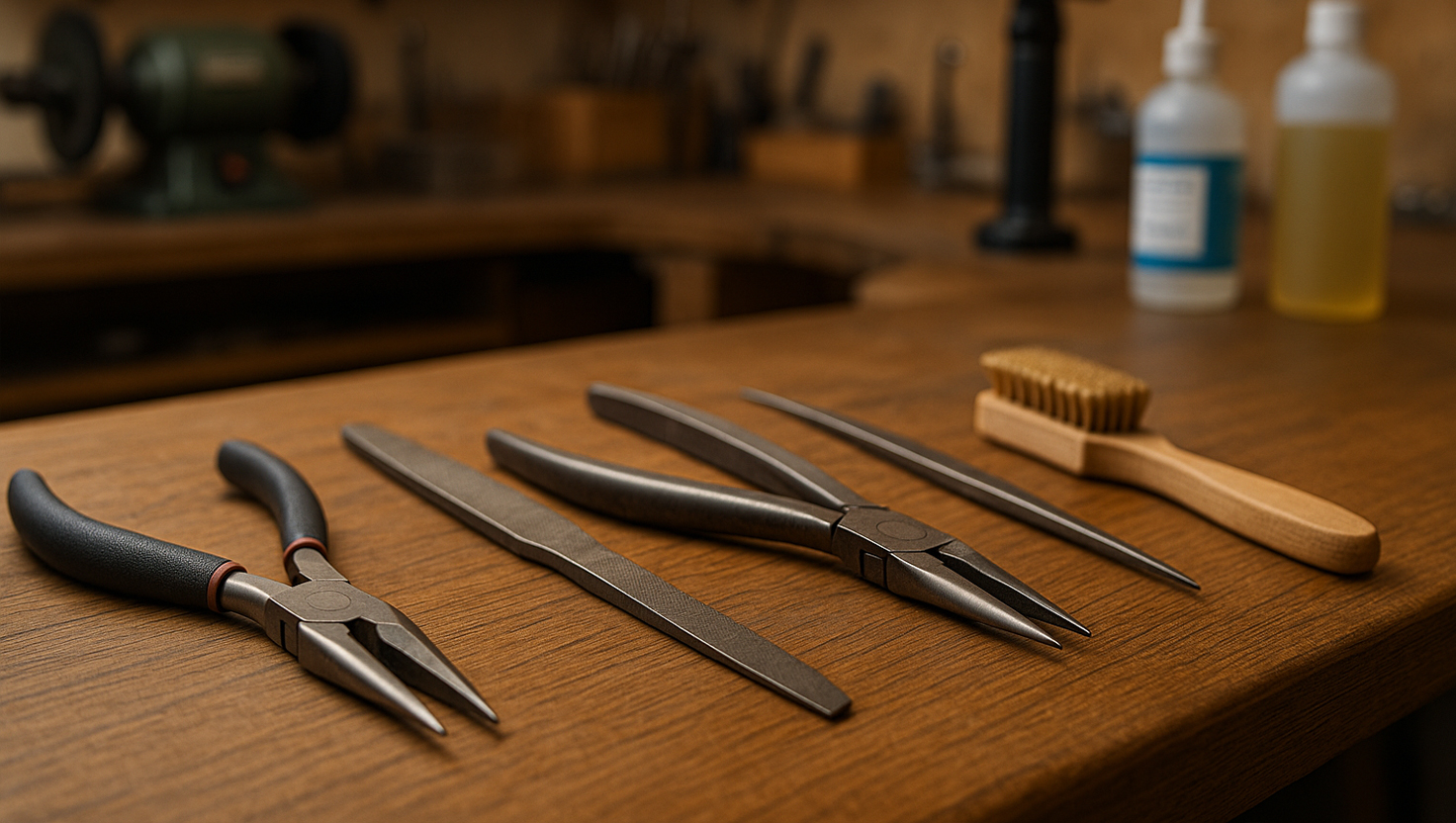
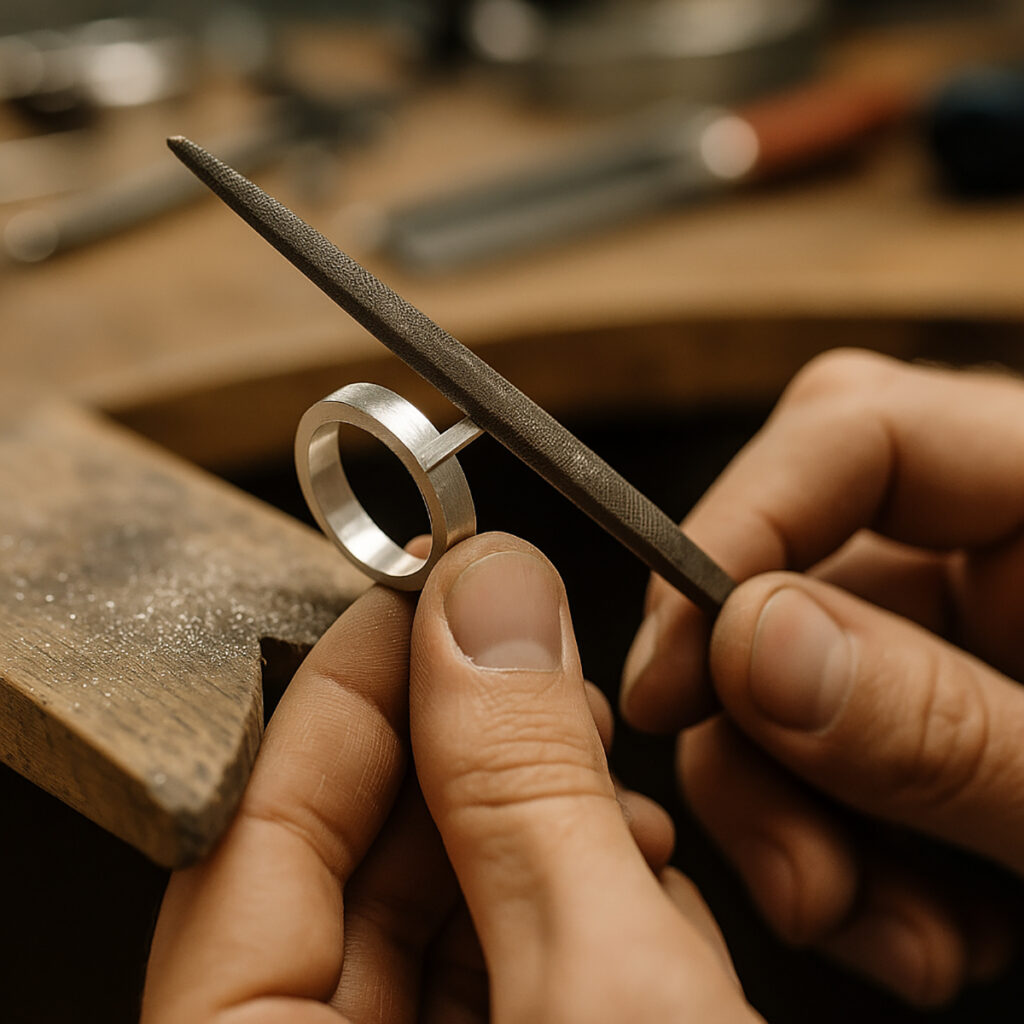
Hand tools (jewellery pliers, files, tweezers)
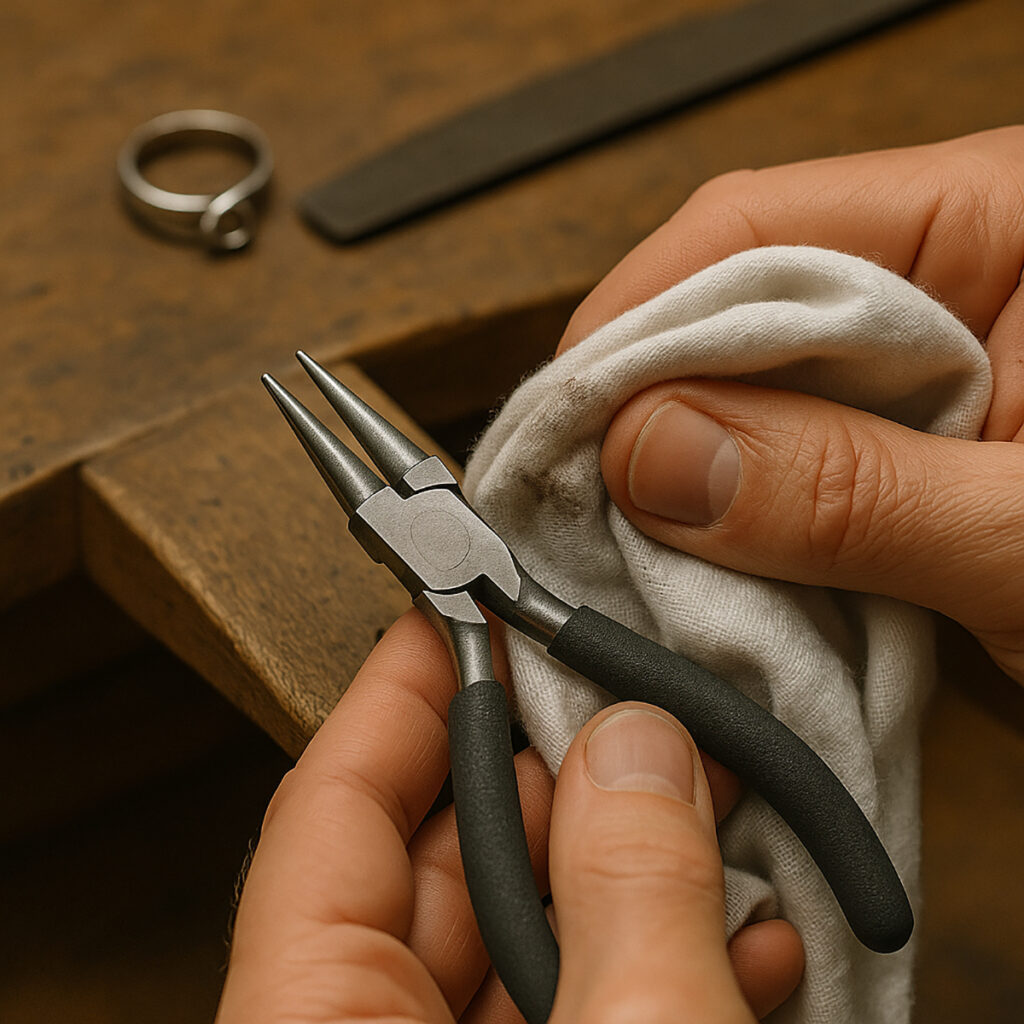
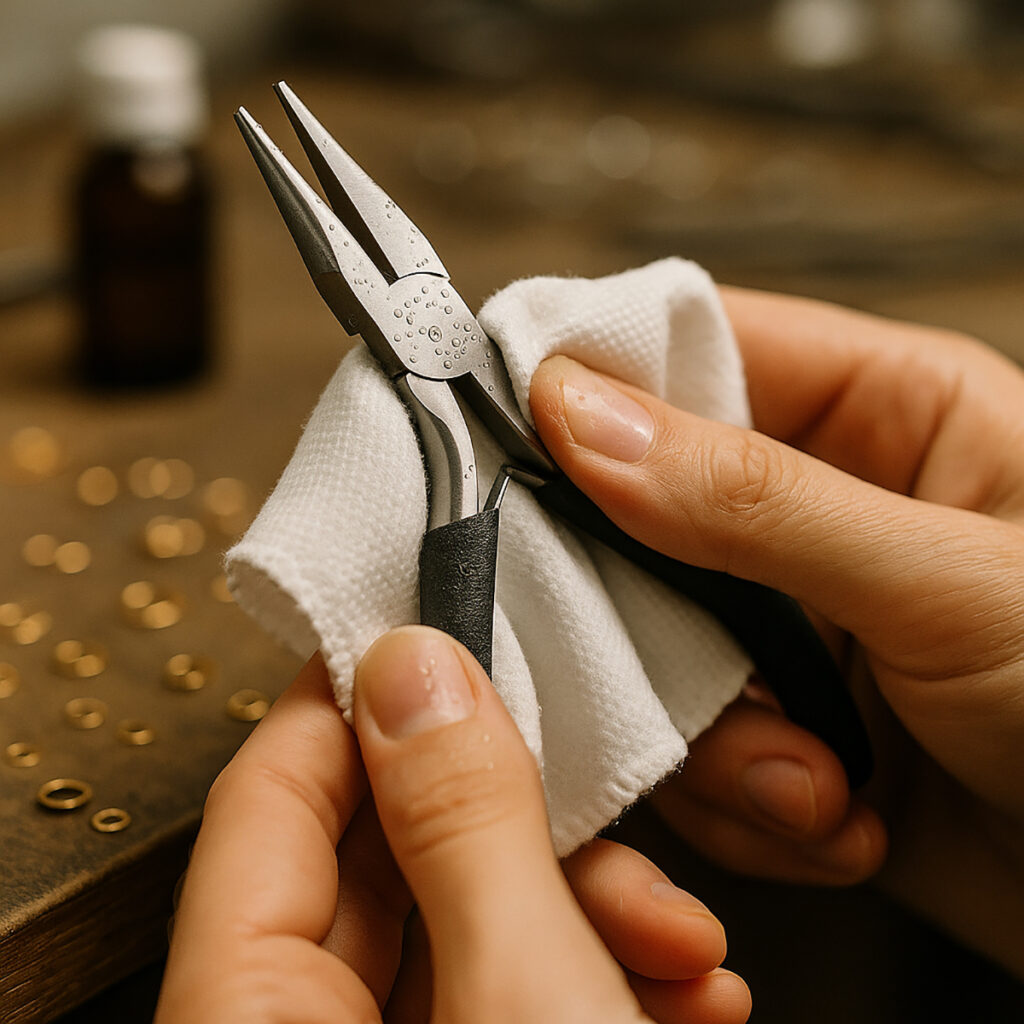
Wipe after every use with a microfiber cloth.
Lubricate joints/pivots with light machine oil.
Store in separators, racks, or holders with tip protection.
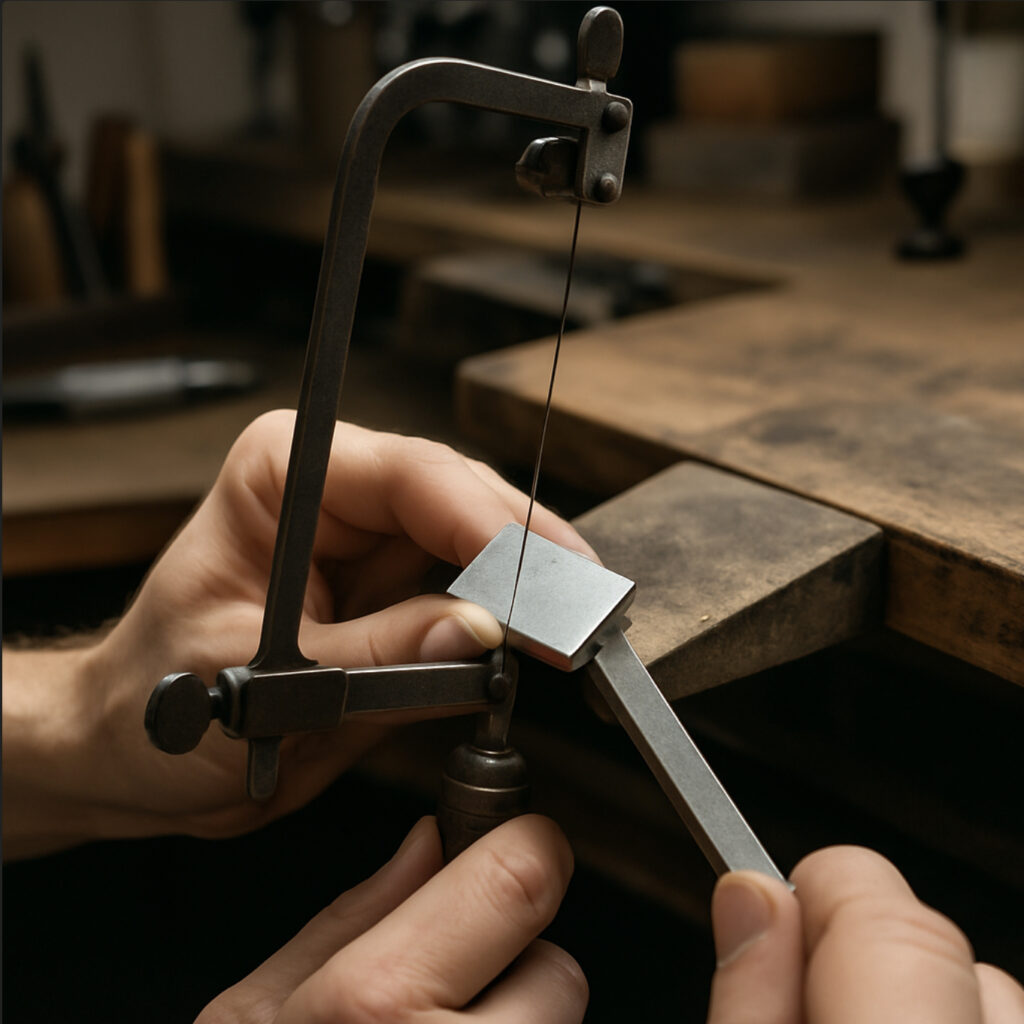
Cutting tools & abrasives (saw blades, drill bits, burs)
Remove metal dust using compressed air.
Lightly coat tips with paraffin oil (or similar protective oil).
Store in a dry place – humidity equals rust.
Rotary & mechanical tools (micro-motors, polishing machines)
Blow out dust regularly with compressed air.
Inspect cables, sockets, handpieces and chucks.
Replace collets and consumables according to the manufacturer’s instructions.
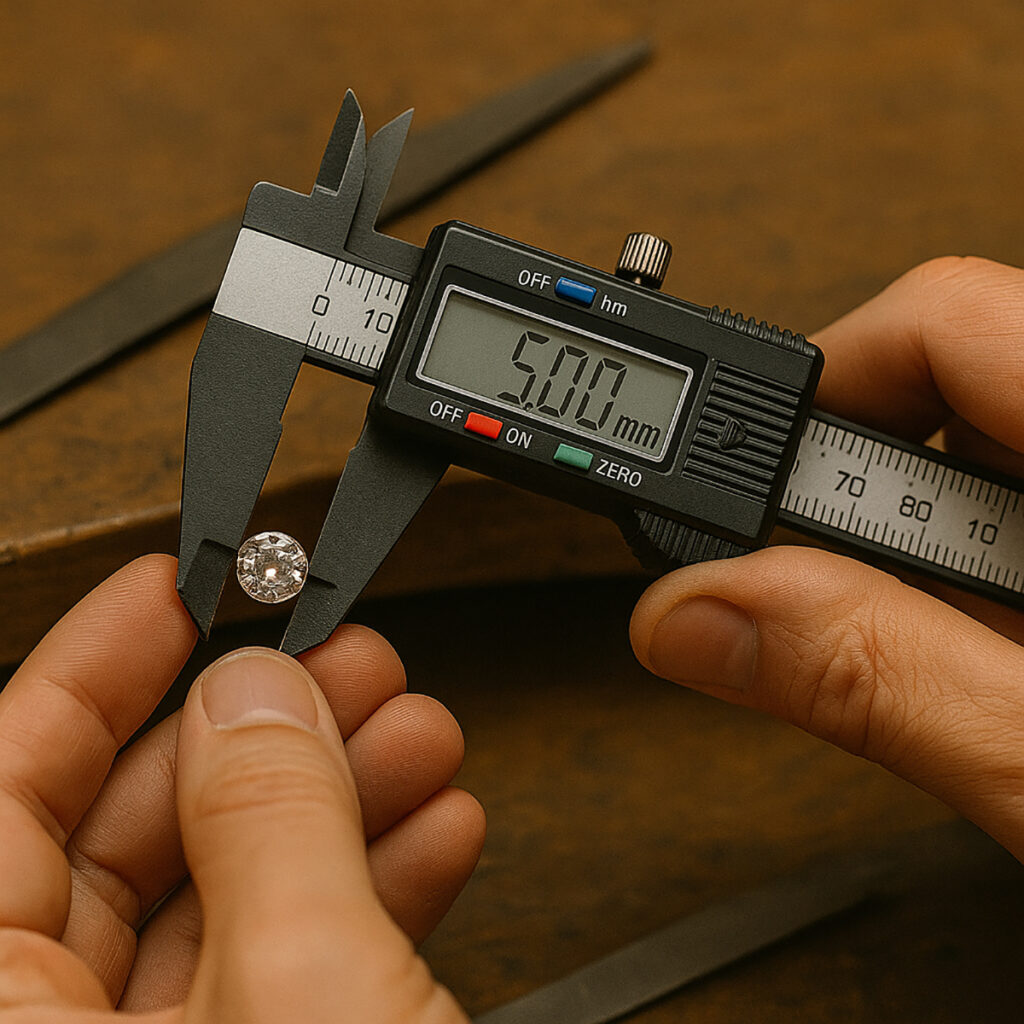
Measuring tools (calipers, micrometers)
Store in dry cases with a moisture absorber.
Calibrate periodically to keep measurements accurate.
Avoid contact with harsh chemicals.
Conclusion:
Each tool group needs its own cleaning, lubrication, and storage strategy – this is how you keep tools fully functional and accurate.
MODULE 3: WORKSHOP ORGANIZATION & ENVIRONMENT
How temperature and humidity affect metal tools and moving parts.
Why good lighting and ergonomics reduce tool wear (and mistakes).
Organization matters: a jewellery workshop isn’t a garage – every tool needs a home.
Clean vs. dirty zones: what to separate and how to label it properly.
Conclusion:
A controlled, well-organized workspace protects tools and speeds up jewellery making process.
MODULE 4: DAILY & PERIODIC MAINTENANCE ROUTINE
Daily
Wipe and put every tool back in its place.
Remove dust, metal filings, and polishing compound residue.
Protect cutting edges with a thin oil film or a silicone cover.
Weekly
Check for wear, looseness, and play in moving parts.
Lubricate joints, guides, and pivots.
Clean hard-to-reach areas properly.
Monthly
Perform a full check of mechanical tools.
Inventory spare parts and consumables.
Calibrate measuring tools and do minor maintenance tasks.
Conclusion:
A daily/weekly/monthly routine extends tool life and helps you spot wear early – before it becomes a problem.
MODULE 5: COMMON JEWELRY TOOLS MAINTENANCE MISTAKES
Working with dirty tools that contaminate jewellery surfaces.
Putting tools away without cleaning them first.
Storing tools in damp drawers with no airflow.
Using one tool for everything (e.g., pliers instead of a hammer).
No labeling for tools dedicated to specific materials (cross-contamination).
Conclusion:
Avoiding these mistakes prevents expensive failures and protects the quality of your jewellery collection.
MODULE 6: STARTER KIT FOR JEWELLERY TOOL MAINTENANCE
Microfiber cloths.
Precision oils (Ballistol, WD-40 Specialist, paraffin oil).
A container with rice or silica gel (moisture control).
Compressed air (canned).
Brass and nylon brushes.
Compartment boxes and organizers.
Labels and markers.
Conclusion:
A complete starter kit gives jewellers everything needed for consistent, effective tool maintenance.
TRAINING FOR JEWELLERS SUMMARY
Clean, well-maintained jewellery tools deliver precision and safety.
Systematic care is far cheaper than constant replacement.
Workshop organization protects tools and improves jewellery making workflow.
Regular inspections help you catch wear early – before it becomes a real issue.
Tool care is an investment in your workshop and your future. Without reliable tools, you won’t reach true mastery – good luck keeping your equipment in top condition!
And while handmade jewellery is incredibly rewarding – and wide selection of jewellery supplies can be made at home – it often makes sense to use high-quality ready-made professional supplies to speed up production and achieve a consistent and well designed collection for your customers.
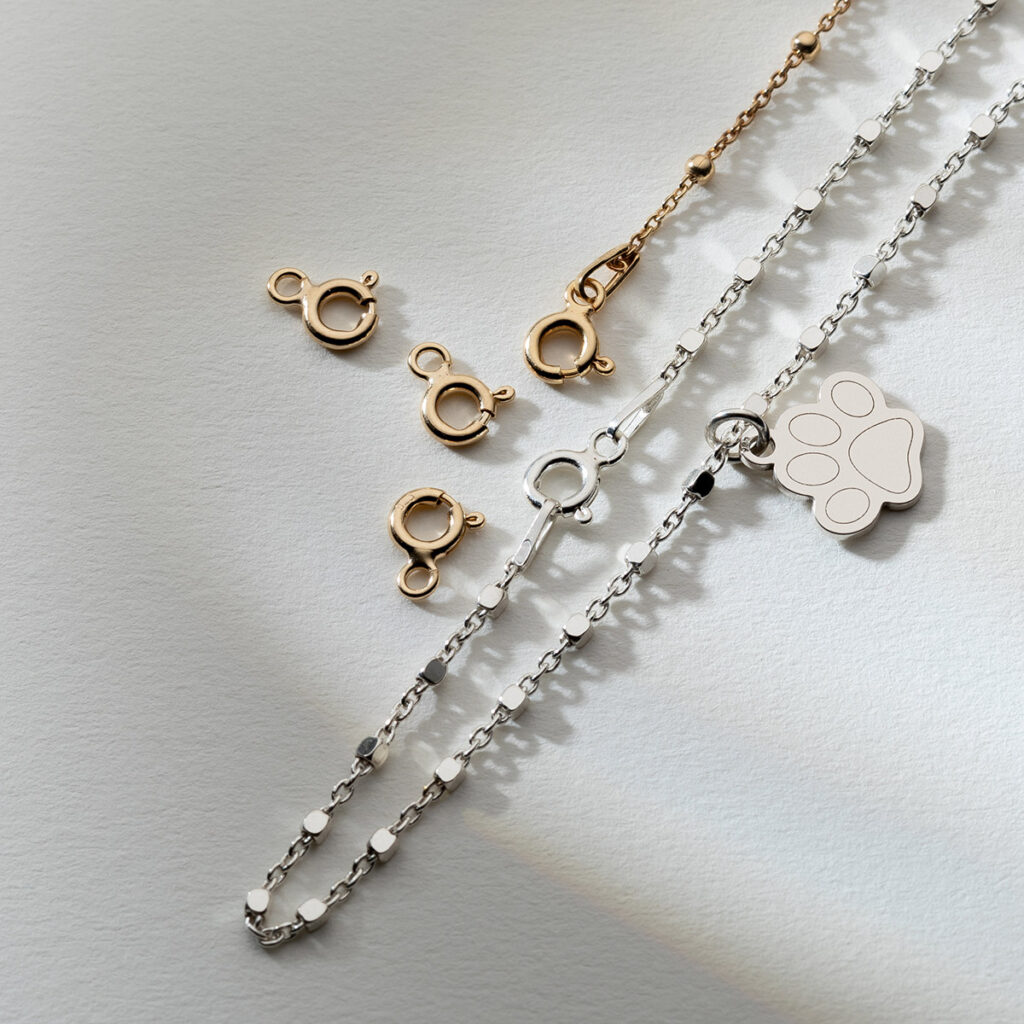
As a jewelry findings manufacturer, we offer headpins, necklace chains, charms (cast parts and laser-cut metal sheets), clasps, connectors, jump rings, earring posts and ear wires, ring blanks, wire wrapping wire, stone settings, as well as gold findings, gemstones, semi-precious stones, pearls, beads, crystals, and other professional jewelry-making supplies.
Discover high-quality 925CRAFT supplies, and start creating earrings, necklaces, bracelets, rings, cufflinks, and well designed, whole jewellery collections – saving time while achieving a professional result.

Want to know more?
- Find out: Swarovski FAQ — Part 3
- Read the article: Gold findings for jewelry
- Get inspired: Cube beads with letters for jewellery making
- Check also: Bracelets blanks for women’s favourite piece of jewelry
- Discover: The most fashionable chain types – part 1