




TRAINING 27: METHODS AND PROFESSIONAL TOOLS FOR TELLING NATURAL GEMS FROM SYNTHETIC GEMS
INTRODUCTION
Contents
- 1. INTRODUCTION
- 2. MODULE 1: BASIC VISUAL INSPECTION – INCLUSIONS AND COLOR IN NATURAL GEMS
- 3. MODULE 2: REFRACTIVE INDEX (RI) – USING A GEM REFRACTOMETER
- 4. MODULE 3: POLARISCOPE AND DICHROSCOPE – BIREFRINGENCE AND POLARIZATION
- 5. MODULE 4: DENSITY AND SPECIFIC GRAVITY – THE HYDROSTATIC TEST
- 6. MODULE 5: UV FLUORESCENCE AND SPECTROSCOPY – CHEMICAL SIGNALS OF SYNTHETIC STONES
- 7. MODULE 6: GEMMOLOGICAL CERTIFICATE – FINAL VERIFICATION OF AUTHENTICITY
- 8. SUMMARY
- 9. Want to know more?
- 10. Stay up to date
Being able to tell a synthetic gem from its natural counterpart is essential for anyone who plans to make or sell jewellery. It’s not only a pricing issue – it’s about customer trust and transparent selling. In this online jewelry training, you’ll learn practical gemstone identification techniques and how to use core gemmological tools to evaluate authenticity.
Jewellery Making Training Goals
Understand the differences between natural gems and synthetic (lab-grown) stones.
Learn visual and instrument-based methods of gemstone identification.
Perform key tests: refractometry (RI), specific gravity/density, UV reaction.
Know when a stone should be sent to a gemological institute.
This article is divided into 6 modules, moving from simple observation to advanced certification.
MODULE 1: BASIC VISUAL INSPECTION – INCLUSIONS AND COLOR IN NATURAL GEMS
10× loupe inspection: look for inclusion patterns such as “clouds,” needles, and internal growth features.
Synthetic stones often appear almost flawless or show characteristic Verneuil flame-fusion growth lines (curved striae).
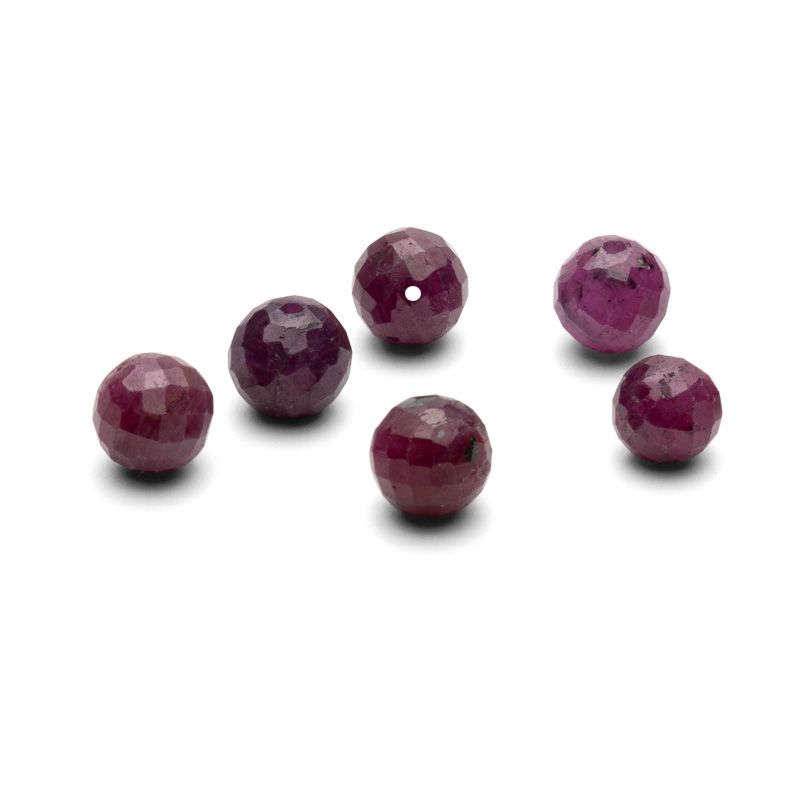
Compare luster and appearance: natural ruby vs lab-grown synthetic corundum.
Key takeaway:
Inclusion patterns and surface luster provide the fastest first signal that a gemstone may be synthetic.
MODULE 2: REFRACTIVE INDEX (RI) – USING A GEM REFRACTOMETER
How to set up a refractometer and apply contact liquid correctly.
RI ranges for popular precious stones (e.g., diamond ~2.42 vs moissanite ~2.65).
Detecting substitutes with unusual RI values (lead glass, YAG, etc.).
Key takeaway:
RI measurement is an objective way to confirm a gemstone species and helps flag common simulants and substitutes.
MODULE 3: POLARISCOPE AND DICHROSCOPE – BIREFRINGENCE AND POLARIZATION
Uniaxial vs biaxial gems; some synthetic spinels may show different optical behavior than expected.
Dichroscope use: observing pleochroism (dual colors) in tourmaline or iolite.
Checking crystal growth directions in flux-grown sapphires.
Key takeaway:
Birefringence and polarization tests can reveal artificial growth patterns in precious stones, invisible to the naked eye.
MODULE 4: DENSITY AND SPECIFIC GRAVITY – THE HYDROSTATIC TEST
Archimedes’ principle using a jewellery scale with a water basket.
Comparison example: cubic zirconia ~5.6 g/cm³ vs diamond ~3.5 g/cm³.
When to use heavy liquids (e.g., bromoform) instead of water.
Key takeaway:
Physical properties like specific gravity can quickly rule out popular synthetic gems and simulants that have different density.
MODULE 5: UV FLUORESCENCE AND SPECTROSCOPY – CHEMICAL SIGNALS OF SYNTHETIC STONES
UV reaction under long-wave (365 nm) and short-wave (254 nm).
HPHT vs CVD diamonds: fluorescence/phosphorescence behavior patterns.
Hand spectroscope basics: absorption bands linked to chromium, cobalt, and iron.
Key takeaway:
UV response and absorption spectra reveal chemical information you can’t reliably see with the eye alone.
MODULE 6: GEMMOLOGICAL CERTIFICATE – FINAL VERIFICATION OF AUTHENTICITY
When to send precious stones for testing to labs such as GIA, IGI, or HRD.
What a report includes: species, origin (when determinable), and treatments (HPHT, dyeing, etc.).
Photo documentation and laser inscription on the girdle (when applicable).
Key takeaway:
A laboratory report is the most reliable proof of gemstone authenticity.
SUMMARY
Step by step, you’ve learned visual gemstone identification, refractometer use, specific gravity testing, and UV analysis. Remember: natural gemstones form through geological processes that take millions of years – leaving unique inclusions and structures. With these methods, you can detect most synthetic stones on your own and know when a professional certificate is the safest choice. This is the foundation of trustworthy, transparent work on the jewellery market.
In the 925CRAFT range, you’ll find high-quality natural gemstones, as well as sterling silver and gold jewelry components for creating necklaces, bracelets, earrings, rings, cufflinks, and many other jewelry pieces.
Want to know more?
- Find out: Sterling silver spacer beads and balls
- Read the article: How to start a jewelry business – a guide for beginners
- Get inspired: Swarovski FAQ – Part 2
- Check also: Epoxy resin – silver bases for embedding souvenirs
- Discover: 925CRAFT- jewelry making supplier